YuSMP Travel Editorial Team
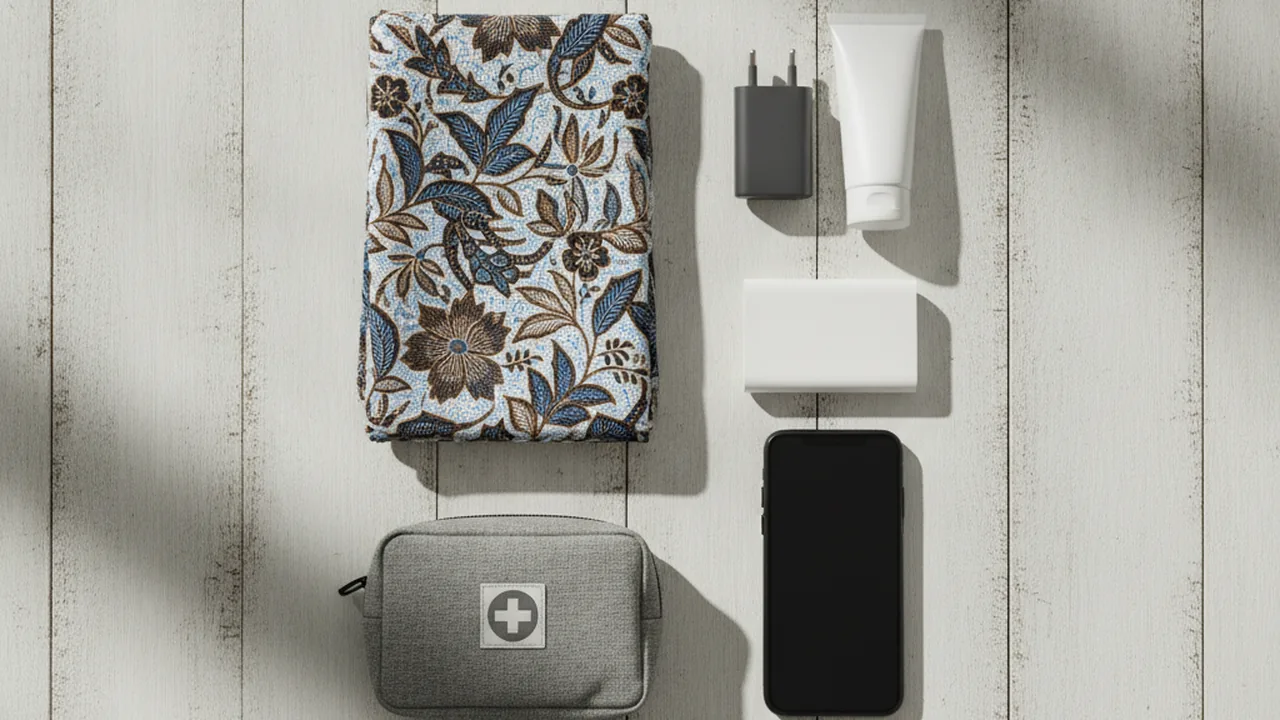
Bali doesn't ask for much: your documents and an e-VOA, a card that actually works plus cash rupiah, a sarong and modest clothing for temples, a compact first-aid kit and a power adapter — you can buy the rest on the island. A 30-day visa, a payment method that works and the right clothing for temples matter more than how much you pack. If you haven't picked when to go and which part of the island suits you, start with our Bali overview, which covers regions, seasons and budget. Below is a step-by-step checklist built on rules verified for late 2026.
Documents and visa: what you need before flying to Bali
- Passport. It should be valid for at least 6 months from your entry date, with at least one blank page for a visa stamp. Check the exact requirement with your own consulate before you travel.
- VOA or e-VOA. Indonesia isn't visa-free for Russian citizens, so a visa is required either way. You can get a Visa on Arrival (VOA) at Ngurah Rai Airport or apply online in advance (e-VOA) on the official portal evisa.imigrasi.go.id. Both give you 30 days and cost the same — as of October 2026, roughly 500,000 IDR. For the full breakdown of duration, extensions and payment quirks, see our article on Bali visa rules.
- Insurance. A policy with medical cover matters — private healthcare on the island isn't cheap, and without insurance you pay for treatment yourself.
- Copies of documents. Scans of your passport, visa, insurance and bookings, stored separately from the originals, in case anything gets lost.
Money on Bali: which card works, and which doesn't
A Mir card isn't accepted anywhere on the island, and Russian-issued Visa and Mastercard have been cut off from international payment systems since 2022 and don't work at any ATM or terminal outside Russia. UnionPay cards from some Russian banks work only partially, not at every terminal. A working combination for a traveller from Russia is cash rupiah as your spending base, plus a local wallet — GoPay or OVO — topped up from a foreign card, for scanning QRIS codes at local businesses: warungs, markets and some taxis. For a full breakdown of payment options, limits and where to withdraw cash, see our guide on paying in Bali: cards, QR codes and cash.
Clothing and sarong: temple dress code
The climate is hot and humid year-round, so the basic rule is lightweight, breathable fabrics — cotton, linen, as little synthetic material as possible. Beachwear alone isn't enough, though — Bali's temples have their own dress code.
- Light t-shirts, shorts and dresses in natural fabrics for everyday wear.
- A sarong. A wrap worn from the waist to the ankles; most major temples lend or rent one out at the entrance, but bringing your own is faster and more convenient, especially during busy periods.
- Modest clothing as a backup if you don't have a sarong on hand: shoulders and knees covered, a long-sleeved shirt and long trousers or a skirt.
- Swimwear and a compact microfibre towel — handy for beaches, waterfalls and pools.
- Closed trekking shoes for volcano hikes and rice-terrace trails — sandals aren't suitable on uneven paths.
- A light cardigan or jacket — not for the weather outside, but for air conditioning on transport and in cafes.
First-aid kit, sun and insect protection
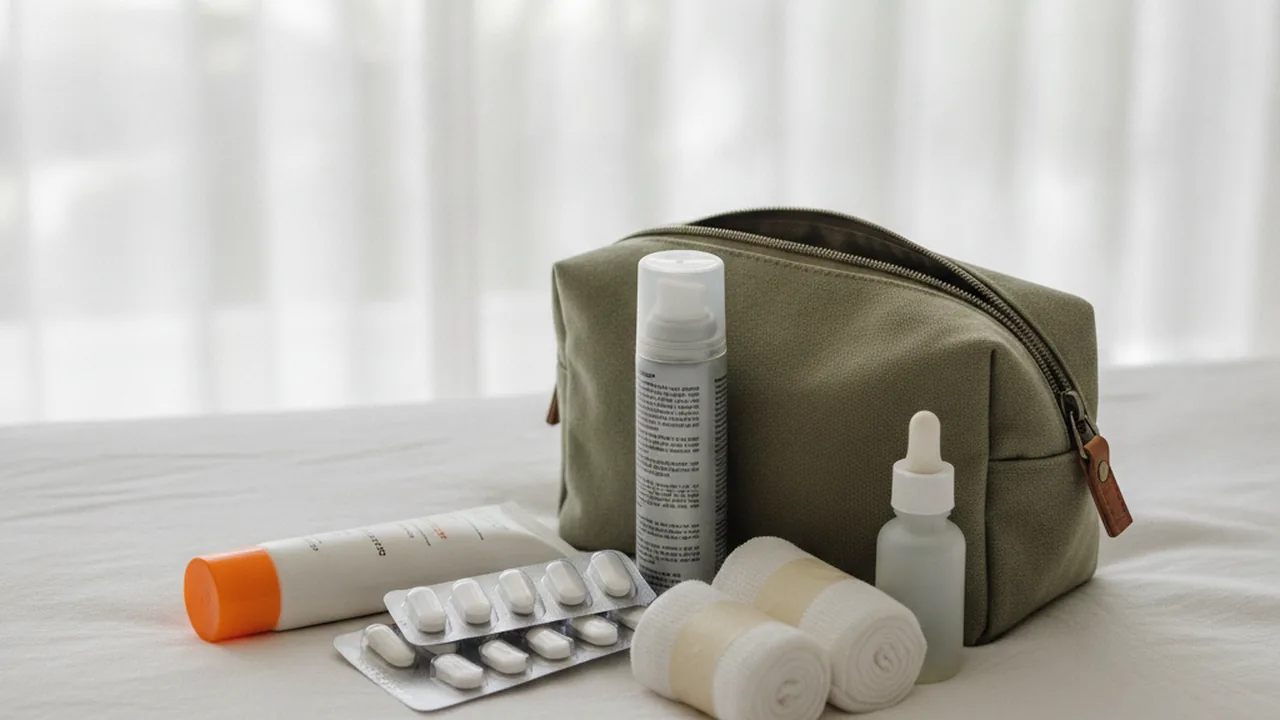
A minimal set: oral rehydration salts, an antiseptic for cuts, an antihistamine, fever and pain relief, a DEET- or picaridin-based repellent and a water-resistant SPF 50+ sunscreen. For a full breakdown and what's easier to buy locally, see our travel first-aid guide for the tropics.
Water and stomach health
Tap water isn't safe to drink on Bali — even for brushing your teeth, bottled or filtered water is the safer choice. This basic hygiene rule in the tropics does more to prevent stomach upset than any medicine you pack.
Power, adapters and connectivity
Bali uses sockets of types C, E/F and G — a standard European plug usually fits with a simple adapter, but grounded plugs and some hotels with different standards call for a universal adapter.
- A universal power adapter — useful if you switch hotels or your devices have grounded plugs.
- A power bank — for long transfers and days spent away from the hotel.
- eSIM or a local SIM. For the southern towns and resorts — Kuta, Canggu, Seminyak, Ubud — XL Axiata and IM3 Indosat cover you well, while Telkomsel holds the strongest signal around Nusa Penida, the Gili Islands and the mountain areas near Mount Batur. Since 1 July 2026, Indonesia requires mandatory biometric SIM registration under the "SEMANTIK" programme — a physical SIM may need an in-person check, while a data-only eSIM usually doesn't. See our eSIM guide for Bali for more.
If you're planning to ride a scooter
Renting and riding a scooter on Bali requires an international driving permit — without one, tourists get fined, and a serious violation can lead to deportation. Police regularly check documents specifically from tourists on bikes, especially in the southern tourist areas. For what else counts as a violation and the fines officially confirmed, see our guide to Bali laws and fines for tourists.
What to pack by season
The island has two seasons: dry (roughly April to October) and wet (roughly November to March). For a month-by-month and region-by-region breakdown, see our guide on when to fly to Bali and where. Below are the packing priorities for each season.
Packing priorities by season
| Season | Months | Packing priority |
|---|---|---|
| Dry season | April – October | As much breathable fabric as possible, extra sun protection, a hat |
| Wet season | November – March | A compact raincoat, a waterproof phone pouch, quick-drying clothes |
| Shoulder season | April–May, September–October | A light all-purpose kit; a raincoat is still worth packing |
Rain in the wet season usually comes as short but heavy downpours in the afternoon — an umbrella isn't enough on a scooter, so pack an actual raincoat.
What you don't need to pack
- Large amounts of cash. There's nowhere to exchange a large sum at a good rate — it's easier to withdraw rupiah from ATMs or top up a local wallet from a working card.
- Warm clothing "just in case". Temperatures on the island stay comfortably warm year-round — you won't need a jacket even in the wet season.
- An oversized medicine stash. Common medicines are easy to buy at pharmacies in major towns and resorts; only pack what's prescribed.
YuSMP Travel editorial note
Building this checklist, we followed the same principle we use when matching destinations: if a point isn't backed by verified data, we say so instead of guessing — see our methodology in how we match destinations and verify data. We checked the wording on visas, money and SIM registration against official sources — Indonesia's immigration service and mobile carriers — and will update this article if the rules change.
Packing order: ahead of time, 3 days out, departure day
- Ahead of time: check your passport validity, arrange an e-VOA or plan for a VOA on arrival, buy insurance, book your hotel and flights, and fill in any gaps in your clothing and first-aid list.
- 3 days before departure: plan your rupiah and cash, set up GoPay or OVO, make copies of your documents, and check your home medicines for restricted substances.
- On departure day: charge your power bank and devices, pack the adapter and sarong in your carry-on, and keep an offline copy of your insurance and visa.
Frequently asked questions
Do Russian travellers need a visa for Bali?
Yes. Indonesia isn't visa-free for Russian citizens. You can get a VOA (visa on arrival) or an e-VOA — both valid for 30 days, costing roughly 500,000 IDR as of October 2026. See our article on the visa rules for details.
Which bank card works on Bali?
A Mir card doesn't work anywhere on the island. Russian-issued Visa and Mastercard have been cut off from international systems since 2022. UnionPay cards from some Russian banks work only partially. Cash rupiah remains essential for most spending.
Do I need a sarong to visit temples?
Yes — shoulders and knees must be covered. Major temples usually lend or rent a sarong at the entrance, but bringing your own is faster and more convenient during busy periods.
What power adapter do I need on Bali?
The island uses sockets of types C, E/F and G. A standard European plug usually fits without an adapter, but grounded plugs and some hotels with different standards call for a universal adapter — check your devices' plug type before you travel.
Do I need an international driving permit to rent a scooter?
Yes — without one, tourists get fined, and a serious violation can lead to deportation. See our guide to Bali laws and fines for tourists for more.
What shouldn't I bring to Bali?
Large amounts of cash to exchange, warm clothing "just in case" and an oversized medicine stash without a prescription — none of these are needed in a tropical climate, and most things are easy to buy or exchange on the island.
Entry rules and payment restrictions change — check the latest requirements at evisa.imigrasi.go.id and with your own bank about using your card abroad before you travel.