YuSMP Travel Editorial Team
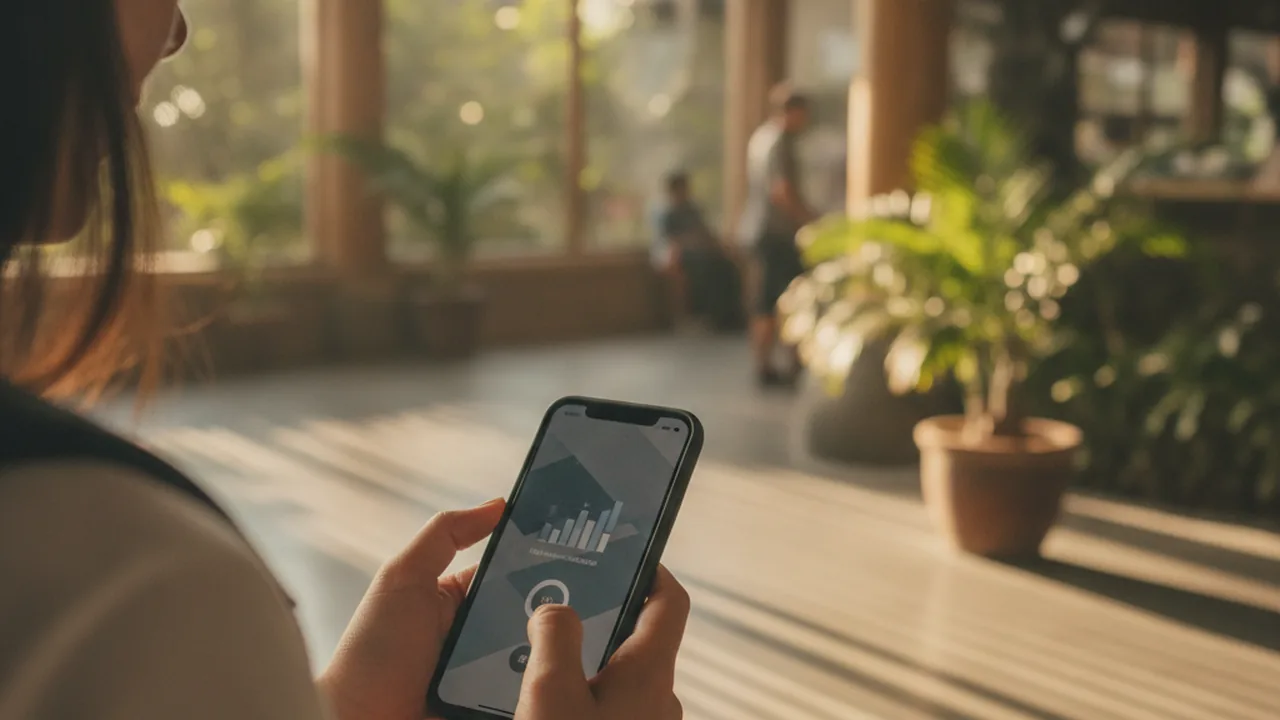
Choosing an eSIM for Bali comes down to the carrier's network: Telkomsel, XL Axiata and IM3 Indosat all work well in the southern towns and resorts — Kuta, Canggu, Seminyak, Ubud — while Telkomsel holds the signal most reliably around Nusa Penida, the Gili Islands and the mountain areas near Mount Batur. Prices between carriers aren't far apart, but since 1 July 2026 Indonesia has required mandatory biometric SIM registration under the SEMANTIK programme. Below is a coverage comparison, November 2026 prices, a look at the new rule, and how to set up an eSIM before you fly. This angle is different from our broader eSIM guide for Asia — different carriers, different regulator. For the wider picture, see the Bali overview.
Telkomsel, XL, IM3: how coverage differs in Bali
Four main carriers operate in Bali. Telkomsel has the largest infrastructure and the most reliable coverage outside the tourist centres: its network reaches mountain villages near Mount Batur and the ferry docks to Nusa Penida and Nusa Lembongan. XL Axiata and IM3 Indosat both work well across southern Bali — Kuta, Canggu, Seminyak, Denpasar, Ubud — and on most beach resorts, but their coverage noticeably thins out away from paved roads and in the mountains. Smartfren is the fourth carrier, with coverage that's mostly urban and local; tourists rarely consider it for a travel route that covers much ground.
In practice: if your route includes Nusa Penida, the Gili Islands, the Kintamani area or a Mount Batur hike, go with Telkomsel. If you're mostly staying in Kuta, Canggu, Seminyak or Ubud, the coverage difference is minimal, and price and format — eSIM through an app or a physical SIM at a shop — become the deciding factor.
eSIM or a physical SIM: what to bring
The right format depends on how long you're travelling and whether you need an Indonesian number. For a short Bali trip, a data-only eSIM is more convenient: it's set up in advance and skips the shop visit. For stays longer than two to three weeks, a physical SIM with a larger monthly data bundle and a number of your own can work out cheaper.
You'll want an Indonesian number if you plan to:
- book rides and deliveries through Gojek or Grab, which tie to your phone number;
- receive verification codes from Indonesian services, banks and payment apps;
- sign up for local services and loyalty programmes linked to a phone number;
- book villas, tours and transfers by phone directly with local providers.
If you don't need a number, a data-only eSIM is enough: it covers maps, messaging apps and social media without an Indonesian number, and unlike a physical SIM, it doesn't always require an in-person biometric check.
How much eSIM/SIM in Bali costs in 2026
Plan prices vary across the four carriers by data volume and duration. Here's a price guide in Indonesian rupiah and US dollars as of November 2026; the exchange rate used is roughly $1 ≈ 16,000 IDR, and reseller or retail prices may differ slightly.
Tourist eSIM/SIM prices in Bali, guide for November 2026, IDR and $
| Carrier | Duration | Data | Price |
|---|---|---|---|
| Telkomsel | 7 days | 8 GB + local number | IDR 100,000 (~$6) |
| Telkomsel | 30 days | 20 GB + local number | IDR 200,000 (~$12.5) |
| XL Axiata | 10 days | 15 GB, data-only eSIM | IDR 90,000 (~$5.6) |
| IM3 Indosat | 14 days | 20 GB, data-only eSIM | IDR 115,000 (~$7.2) |
| Smartfren | 30 days | 25 GB, urban network | IDR 120,000 (~$7.5) |
The most flexible option for a short trip is XL Axiata's data-only eSIM for 10 days: 15 GB for roughly $5.6 with no shop visit. If you need a bigger data buffer and a local number straight away, Telkomsel's 30-day plan is the better deal: 20 GB plus a SIM accepted by banking and courier services. For a month-long trip with heavy data use, Smartfren stands out on price per gigabyte, but only if you're mostly in the city.
The new rule: biometric SIM registration from 2026
Since 1 July 2026, Indonesia has applied Permenkominfo No. 7/2026 — a regulation from the Ministry of Communication and Digital Affairs (Kominfo) that launched the SEMANTIK programme. Under the new rule, every SIM card, including tourist ones, must be registered to its owner with facial biometric verification: a card that hasn't passed the check stays inactive. Foreigners register with a passport and proof of stay — a visa, KITAS or KITAP — and the rule caps registration at three numbers per carrier per person.
For a tourist, this means: a SIM card bought at a shop in Bali gets activated on the spot — staff check the passport and capture a facial biometric scan, and the process takes just a couple of minutes. For an eSIM bought online in advance, verification requirements vary by carrier and reseller — check at checkout. The official source on registration is Telkomsel's SIMPATI registration page; for background on the regulation itself and the SEMANTIK programme, see this report from industry outlet BiometricUpdate.com.
For a broader rundown of rules and fines for tourists, see What Not to Do in Bali: Rules and Fines for Tourists, and for general country context see Bali for Russian travellers: complete guide.
Where to buy: Denpasar airport or the city
Carrier counters are in the international terminal of Ngurah Rai airport (Denpasar), right in the arrivals area, with Telkomsel, XL and IM3 all represented. Prices there usually run 10–20% above retail, but it's faster if you need data the moment you land.
In the city, SIMs and eSIMs are sold by retail chains and the carriers' own shops in Kuta, Denpasar, Canggu and Ubud — these are also where you can top up a plan or switch carriers if one network turns out weaker than expected in your area. If your route spans several seasons and regions, check Bali: when to go and where exactly to plan where you'll be and when, and which carrier best fits that route.
How to set up an eSIM before you fly
If a data-only plan suits you, you can install the eSIM at home over Wi-Fi: you get a QR code from the carrier or reseller and scan it in your phone's settings — the profile gets added in advance, and you don't need to turn data on yet.
The steps:
- Buy an eSIM from your chosen carrier or reseller and get the QR code.
- Install the profile at home over Wi-Fi via Settings → Cellular → Add eSIM (Android has an equivalent menu option).
- Don't turn on mobile data yet — with some providers, the plan's clock starts the moment the profile is activated.
- Turn on mobile data only after you land in Bali, once your phone picks up your carrier's network.
The only requirement is an eSIM-capable phone (most models from the last 4–5 years support it) and a device unlocked for installing third-party carrier profiles.
Frequently asked questions
Do tourists need an Indonesian phone number in Bali?
No, not if all you need is data: a data-only eSIM covers maps, messaging apps and social media without an Indonesian number. You'll need a number if you plan to book rides through Gojek or Grab, receive verification codes from Indonesian services and banks, or book things by phone.
Which carrier is best for Nusa Penida, the Gili Islands and the mountain areas (Kintamani, Batur)?
Telkomsel — it has the widest coverage outside the tourist centres, including the ferry routes to Nusa Penida and Lembongan and the mountain villages near Mount Batur. XL and IM3 can drop out in those areas.
Can you buy an eSIM in advance and skip a shop visit in Bali?
Yes: a data-only eSIM installs over Wi-Fi at home via a QR code from the carrier, and it's best to activate data only after you land. Verification requirements for online purchases vary by provider — check at checkout.
What changed with SIM registration in Bali in 2026?
Since 1 July 2026, Indonesia has applied Permenkominfo No. 7/2026 and the SEMANTIK programme — mandatory facial biometric SIM registration. Foreigners register with a passport and a visa, KITAS or KITAP, with a limit of three numbers per carrier per person.
Does a Russian carrier's roaming plan work as an alternative to an eSIM?
Technically yes, but it's almost always more expensive: roaming plans are built for minimal data use, not daily navigation and video, while a local eSIM or SIM gives you gigabytes a day for a few dollars.
What's the difference between Telkomsel and XL/IM3 for southern Bali (Kuta/Canggu/Seminyak/Ubud)?
In southern Bali all three networks work well, and the real difference is pricing and how you buy: XL and IM3 offer affordable data-only eSIMs with no shop visit needed, while Telkomsel has a wider range of plans with a local number accepted by banking and courier services.
If you're planning the rest of the trip's budget, see how to pay and how much cash to carry in How to Pay in Bali: Cards, QR Codes and Cash. For how to get there from Russia, see How to Get to Bali from Russia: Direct Flights and Layovers. Use our destination match tool to pick dates.
SIM registration rules and prices change — check current conditions with the carrier or an official dealer before you travel.