YuSMP Travel Editorial Team
Paying your way around Bali in 2026 comes down to three main options: a bank card — though not a Russian Mir card, and not a freshly issued Visa or Mastercard — the local QRIS standard (which works with local wallets like GoPay and OVO, but not directly with Russian apps), and cash rupiah, which remain an essential backup for almost any trip. UnionPay cards from some Russian banks work partially and not everywhere. For the bigger picture on the destination, see our Bali overview, and the basics on visas, flights and money in general are covered in our complete Bali guide. Below is a breakdown of each method — what actually works, what the limits are, and how much cash to carry.
Direct answer: what actually works in Bali in 2026
The combination that works for a Russian traveller in Bali is cash rupiah as the base of your budget, a local digital wallet (GoPay or OVO) topped up from a card that genuinely works, and a UnionPay card from certain Russian banks wherever the terminal accepts it. The Mir card doesn't work anywhere on the island, and Russian-issued Visa and Mastercard cards have been cut off from international payment systems since 2022 and don't go through at any ATM or terminal outside Russia.
- cash Indonesian rupiah — essential for warungs, markets, temples and some taxis;
- a local GoPay/OVO wallet, topped up from a foreign card — for scanning QRIS at local businesses;
- UnionPay from a Russian issuing bank (Rosselkhozbank, the Asia-Pacific Bank) — works partially, not at every terminal;
- a card from a foreign (non-Russian) bank — works almost everywhere, like any other foreign card.
For the wider picture on paying abroad, not just in Bali, see "How Russians Can Pay Abroad".
Do Russian cards work in Bali?
The Mir card isn't accepted anywhere in Bali — by any bank or any terminal on the island. The payment system has no agreements with Indonesian acquiring banks, and that has nothing to do with the particular shop or hotel you're dealing with.
Russian-issued Visa and Mastercard cards don't work either — international payment systems cut Russian banks off from processing outside the country back in 2022, and nothing has changed since: the transaction simply fails, whether you insert the card into a terminal, tap it contactlessly, or enter the number on a hotel's booking site.
UnionPay is the one partial option for a Russian-issued card. The network accepts cards, but in practice coverage is uneven: Rosselkhozbank and the Asia-Pacific Bank lean hardest into UnionPay, while acceptance from other issuers can depend on the specific terminal or acquiring bank on the island. Before you rely on UnionPay as your main method, check with your own bank which countries and acquirers your particular card supports — the payment system doesn't publish one open list of partner countries; the official UnionPay International site gives a general sense of the acceptance network.
If you hold an account, card or digital wallet with a foreign (non-Russian) bank, most of this stops being a problem — it works in Bali like any other foreign card, including Apple Pay or Google Pay.
QRIS: Indonesia's QR standard, and why it's not for Russian apps
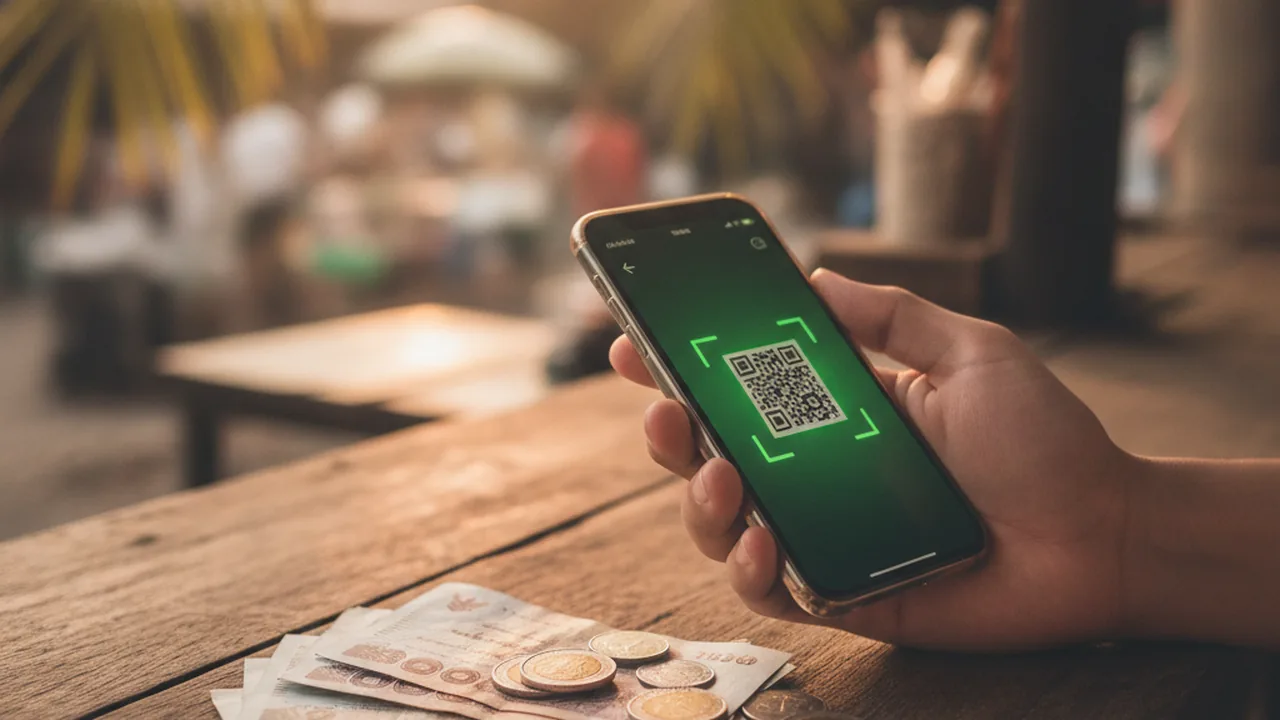
QRIS (Quick Response Code Indonesian Standard) is the single national QR payment standard promoted by the regulator, Bank Indonesia: the same QR code at a vendor's till is accepted by any app connected to the QRIS network. Bank Indonesia's rules cap a single transaction at 10,000,000 rupiah (around Rp10 million).
It sounds convenient — one standard nationwide. But QRIS is built so that only apps connected to its network can scan it directly, and that means Indonesian banks and wallets like GoPay and OVO. There's also a cross-border version of the standard, "QRIS Antarnegara", but it only works for banking apps from partner countries — according to Bank Indonesia, that's Thailand, Malaysia, Singapore, Japan, South Korea and China. Russia isn't on that list, and Russian payment apps — Sberbank Online, T-Bank, VTB and others — can't scan Indonesian QRIS directly, unlike, say, Thai QR in Thailand.
The practical workaround is to set up a local GoPay or OVO wallet (foreigners can register with a passport) and top it up from a card that actually works for you — UnionPay from the right bank, or a foreign card. From there, your wallet scans QRIS like any ordinary Indonesian app: at cafes, mini-marts, some taxis, and even some market stalls.
Cash rupiah: exchange counters, ATMs, how much to carry
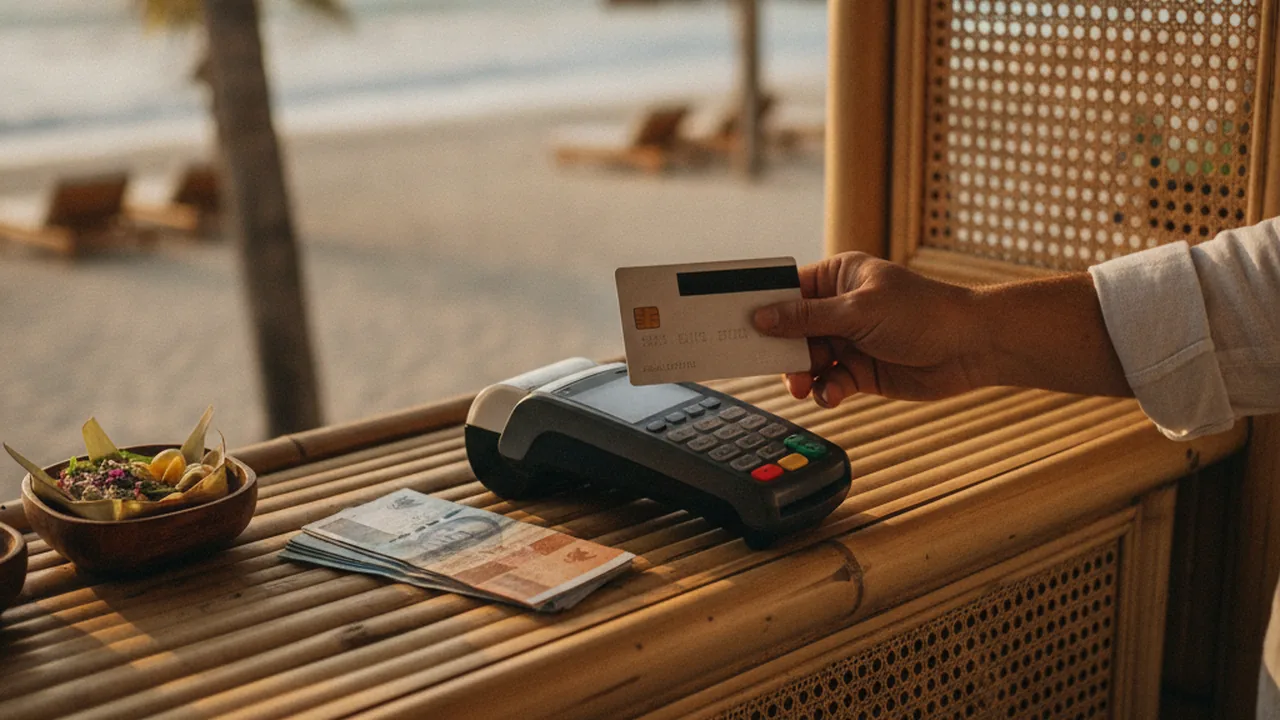
Cash remains the most reliable way to pay in Bali — it covers warungs, markets, temples, motorbike taxis, and most places where QRIS or a card won't go through. The easiest place to exchange currency is a licensed money changer in a tourist area — Kuta, Seminyak, Ubud: unlike street-side booths offering a suspiciously good rate, these display a Bank Indonesia licence and a fixed, clearly shown exchange rate.
ATMs on the island charge a fee for withdrawals on foreign cards — as a rough reference for October 2026, travellers generally report a fee in the tens of thousands of rupiah per transaction, plus the exchange rate set by your card-issuing bank; check the exact figure in your own banking app and on the ATM screen before confirming the withdrawal, since rates and fees change faster than articles get updated.
A sensible approach is to keep part of your daily budget in cash — for warung meals, water, temple entry, short motorbike-taxi rides and tips — while routing the bulk of your spending through a wallet or card wherever that's possible. If you're still choosing where to stay, our piece on Bali hotels without overpaying is worth a look when planning your budget — it's often easier to settle accommodation by card in advance and save cash for small purchases on the ground.
Table: comparing payment methods in Bali
Payment methods in Bali compared
| Method | Where it works | Fee reference | Best for |
|---|---|---|---|
| Mir card | Doesn't work | — | No agreements with Indonesian banks |
| Russian-issued Visa/Mastercard | Doesn't work | — | Cut off from international systems since 2022 |
| UnionPay (Rosselkhozbank, Asia-Pacific Bank) | Some terminals and ATMs | Set by your own bank | Backup option — verify in advance |
| Foreign-issued Visa/Mastercard | Almost everywhere | Set by the issuing bank | Main option if you hold an account abroad |
| Cash rupiah | Warungs, markets, temples, taxis | — | Essential backup in any case |
| GoPay / OVO (QRIS) | Cafes, mini-marts, some taxis | Top-up fee from your card | Everyday purchases via local QR |
What to do if a payment fails
Start with the basics: check your wallet or card balance, your per-transaction and daily limits, and whether payments abroad are switched on in your banking app. In Bali, a disabled "payments abroad" setting or a limit is often the real cause, not a problem on the vendor's side.
Keep a backup method ready: if your QRIS wallet won't go through, switch to cash; if a card fails, try another method or the same terminal a little later. Treat cash rupiah as exactly that — a backup for when things don't go through — rather than assuming a card or QR code will always work everywhere.
One safety habit worth keeping: never hand your card to a vendor to "take it round the till" — in Bali, as in any tourist destination, it's better to tap or insert the card yourself, where you can see it.
Frequently asked questions
Does the Mir card work in Bali?
No, it isn't accepted by any bank or terminal on the island — the payment system has no agreements with Indonesian acquiring banks.
Can I pay by QR code using a Russian banking app?
No. Indonesia's QRIS can only be scanned directly by apps from the cross-border scheme's partner countries (Thailand, Malaysia, Singapore, Japan, South Korea, China); Russia isn't on that list, and Russian banking apps can't read QRIS.
How much cash in rupiah do I need per day in Bali?
The exact amount depends on your travel style — travellers generally suggest keeping a one- to two-day buffer for warungs, markets, temples and taxis, and checking the exchange rate at the counter on the spot.
Where is it safest to exchange currency in Bali?
At licensed money changers in tourist areas — Kuta, Seminyak, Ubud — displaying a Bank Indonesia licence and a transparent rate, rather than street-side booths offering a suspiciously good deal.
Does UnionPay work in Bali?
Partially. Acceptance depends on the card-issuing bank and the specific terminal — cards from Rosselkhozbank and the Asia-Pacific Bank tend to work more often, but not at every point of sale. Check with your own bank before travelling.
What if I don't have access to a foreign card?
Rely on cash rupiah and a local wallet — GoPay or OVO — topped up from a card that actually works for you (UnionPay from the right bank). That's enough to cover everyday spending on the island.
Not sure yet where exactly to fly this season — our destination match tool can help compare Bali against other spots in Asia by season and budget.
Payment rules and exchange rates change — check the current terms on your own bank's website and on the Bank Indonesia website before you travel.