YuSMP Travel Editorial Team
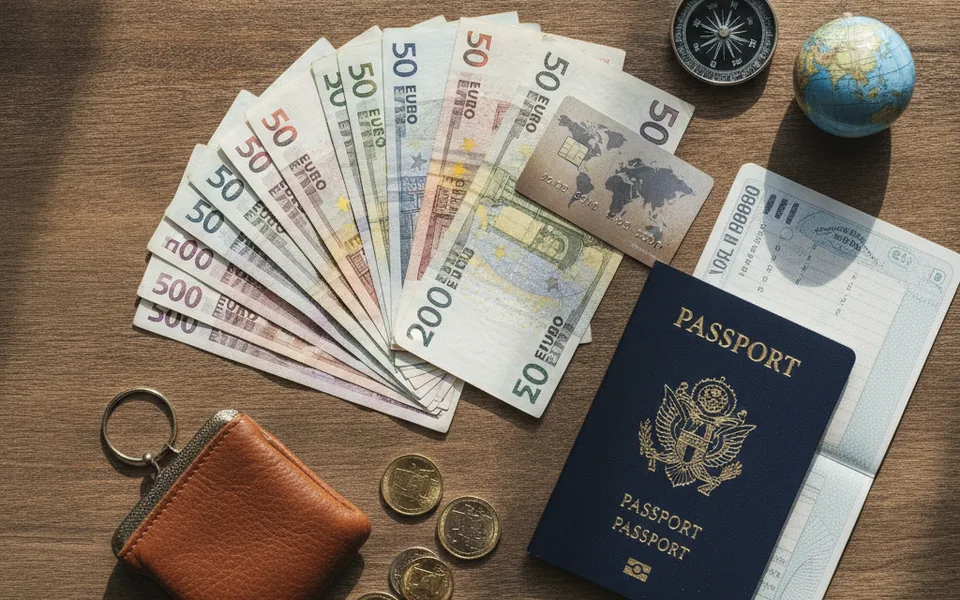
There's no single payment method that works everywhere for Russian travellers abroad. The working model for 2026 is a combination of two or three tools: a primary one (a Mir card or UnionPay), a backup (cash or a bank's QR-payment app) and a fallback plan for when the first two fail. Russians currently have five real channels: the Mir card (accepted in a narrow list of countries), a UnionPay card from a Russian bank, cash, QR payments through bank apps, and a foreign card or account. Below we break down each one — where it works and how to get it. Haven't picked a destination yet? Our destination match tool can help you choose by budget and season.
Mir cards abroad — where they actually work
Mir is Russia's national payment system, and by default it isn't accepted outside the country: acceptance abroad only exists where a local acquiring bank has a separate agreement with NSPK, Mir's operator. As of early 2026, the list looks like this.
Where Mir cards are accepted (as of January 2026)
| Country | Status | Through | Caveat |
|---|---|---|---|
| Belarus | Unrestricted | Payments, local-currency withdrawals, Mir Pay | No limits |
| Abkhazia | Unrestricted | Widely accepted | No limits |
| Cuba | Unrestricted | Widely accepted | No limits |
| Armenia | Limited | VTB Armenia network | Not every bank or terminal accepts it |
| Azerbaijan | Limited | VTB Azerbaijan network | Cash withdrawal capped at 500 manats/day (~23,000 ₽) |
| Vietnam | Limited | VRB bank, QR in the VTB Online app | Narrow network of merchants |
| Kazakhstan | Limited | VTB Kazakhstan network | Not every ATM or shop |
| Tajikistan | Limited | ATMs in Dushanbe | Acceptance outside the capital isn't guaranteed |
| Myanmar | Limited | Select malls and hotels | Narrow network of merchants |
| Laos | Limited | JDB ATMs | Withdrawal fee up to 4% |
| Venezuela | Limited | Tourist zones | Narrow network of merchants |
In practice, Mir works without restrictions only in Belarus, Abkhazia and Cuba (and, de facto, South Ossetia as well); everywhere else on the list, acceptance is patchy and depends entirely on whether a local partner bank has an agreement with NSPK. Before travelling, it's worth checking the current list on the NSPK website (mironline.ru) — it changes more often than the news coverage suggests.
Countries where Mir acceptance is under discussion
As of early 2026, reports mentioned possible Mir expansion into Oman, Thailand, Serbia, Nicaragua and India. These are plans, not facts: connecting a new acquiring bank is a slow, uncertain process, so it's not something to plan a trip around — only the current, confirmed list should be relied on.
UnionPay cards — who issues them and where they're accepted
UnionPay is a Chinese payment system, and for Russian travellers it's currently the widest-reaching option by geography. In Russia, UnionPay cards are issued by Rosselkhozbank and ATB (Asia-Pacific Bank); you can apply for one without leaving the country. UnionPay is accepted in 150+ countries, including China, Thailand, Vietnam, Turkey and the UAE — in other words, nearly every mass-market destination Russians travel to in Asia and the Middle East.
There's a flip side: UnionPay doesn't work in EU countries, and it isn't accepted in India or Japan. If your route touches Europe even as a layover, you can't rely on UnionPay alone — you'll need cash or a foreign card as backup.
One practical quirk worth noting is entering a PIN at terminals in China: some devices are built for a six-digit code, while Russian cards use a four-digit PIN. The exact workaround varies by terminal, so it's better to confirm the correct procedure with your card-issuing bank before the trip rather than rely on anecdotal advice online.
Cash: when there's no substitute
Cash stays the most reliable backup precisely because it doesn't depend on agreements between banks and payment systems. Dollars and euros are the universal option — they can be exchanged in almost any country, in major cities and at airports. For China, it's worth carrying a small amount of yuan in advance, since exchanging currency once you're there, outside the big cities, isn't always straightforward. For Japan, cash isn't a backup — it's the primary tool: foreign cards are far from universally accepted there, and the easiest way to get yen is to exchange dollars at the airport on arrival.
A simple rule of thumb: keep enough cash to cover 2–3 days of the trip, in case your card fails at check-in or somewhere along the way — regardless of how reliable your primary method seemed back home.
QR payments and apps — Turkey, China, Vietnam, India, Sri Lanka
QR payments through Russian banking apps (Sberbank, VTB) and the Faster Payments System work in a number of destinations — Turkey, Egypt, Vietnam, India and Sri Lanka — though how many merchants actually accept it varies from city to city. A detailed country-by-country breakdown for Asia is covered separately in "Money in Asia: where Russian cards fail and what to take in cash", so we won't repeat it here.
In China, the core payment infrastructure is WeChat Pay and Alipay, which are hard for a typical tourist without a Chinese bank account to access. Since December 2025, the Nihao China app has partly solved this: you register with a Russian phone number, and the app is linked to a UnionPay card — so it's an add-on layer on top of the UnionPay tool already covered above, not a separate payment channel.
A foreign card or account — when it's worth it
If you travel abroad often, or your route runs through countries where neither Mir nor UnionPay works, it can be worth getting a dedicated local payment tool. As of early 2026, a physical foreign card (Visa or Mastercard) through an intermediary costs around 45,000–50,000 ₽ on average; a virtual card is cheaper but doesn't cover every use case — for example, it isn't always accepted for hotel bookings or car rental deposits.
The second option is opening an account directly with a bank in Kazakhstan, Uzbekistan, Tajikistan or Kyrgyzstan: the process typically takes anywhere from a few days to two weeks and usually requires being there in person. This isn't a solution for a single trip — it makes sense for people who travel to the region regularly or are already considering a longer stay.
What to bring: a working combination for your trip
The practical takeaway from all of this is not to search for one "perfect" payment method, but to carry a combination of two or three tools suited to your specific destination. For most mainstream routes into Asia, a solid combination is: UnionPay as the primary channel (since it covers Thailand, Vietnam, Turkey and the UAE), plus cash in dollars as a backup for when a terminal or ATM fails. For Belarus, Mir makes more sense as the primary tool; for China, pair UnionPay with Nihao China and a small reserve of yuan.
Before the trip, it's also worth checking which countries don't require a visa at all — that alone shapes how much time and money goes into preparation: see "Visa-Free Countries for Russian Citizens: Full 2026 List". And if your route involves a long flight, our guide to honestly estimating travel time, including layovers, is "Direct or connecting flights to Asia: the real travel time".
Frequently asked questions
Does the Mir card work in Thailand, Turkey or Europe?
No, there's no direct acceptance there right now. Mir integration in Thailand is only under discussion, and Turkey and EU countries aren't on NSPK's current list.
Can I get a UnionPay card without leaving Russia?
Yes. UnionPay cards are issued by Rosselkhozbank and ATB — you apply at a branch inside Russia, just like with a regular debit card.
What should I do if no card works on the spot?
Switch to your backup plan: cash (dollars, euros or local currency) and QR payment through a banking app, if that option is available in the country you're in.
Is it safe to pay through Russian banking QR apps abroad?
Technically it's the same encrypted channel used for payments inside Russia — the app secures data the same way. The real risk is different: the number of merchants actually accepting it is limited and doesn't cover every shop or restaurant, so it's not something to rely on exclusively.
Do I need to notify the tax authority about a foreign account?
Yes, opening an account at a foreign bank is legally subject to notifying Russia's Federal Tax Service — check the exact deadlines and procedure directly on the tax service's website, since this isn't a topic to navigate based on general advice found online.
Payment system rules and banking agreements change quickly — before you travel, check the current list of countries on the NSPK (Mir) website or directly with your card's issuing bank.