YuSMP Travel Editorial Team
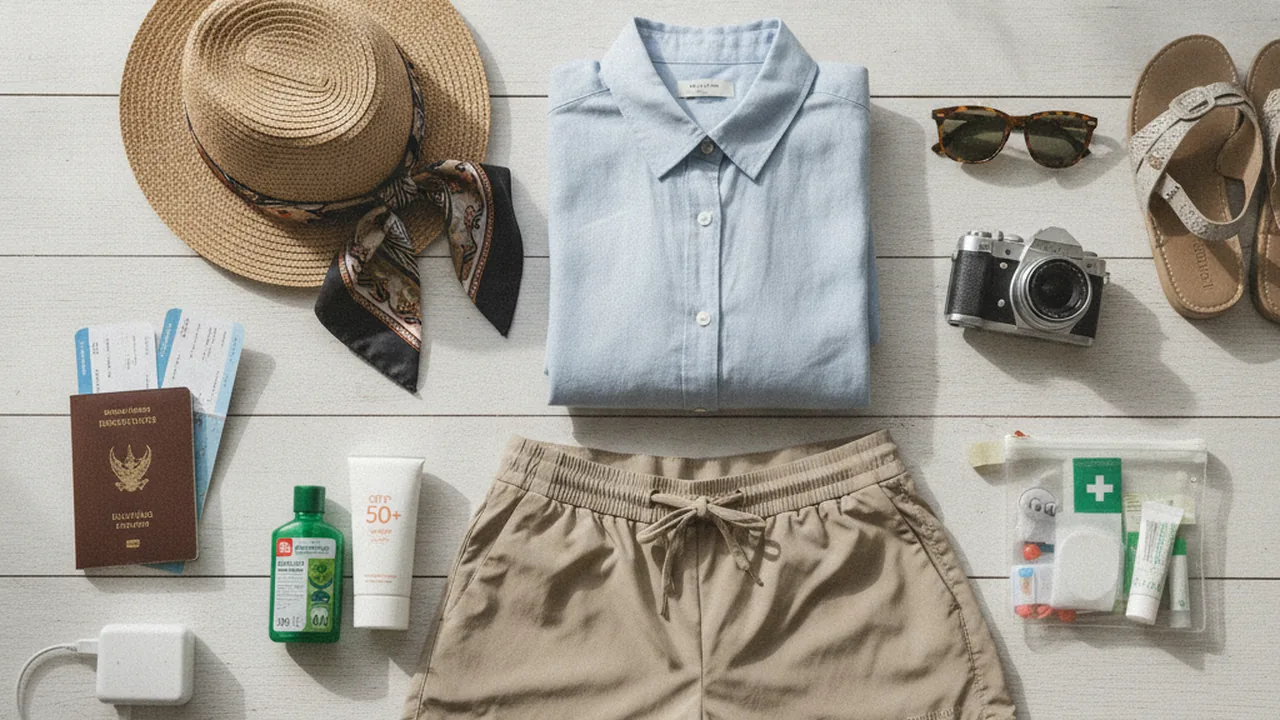
Thailand doesn’t need much: lightweight, modest clothing for temples, a compact first-aid kit, a power adapter and a completed digital TDAC — you can buy everything else locally. Documents and money come first: a passport with enough time left on it, a TDAC filed within 72 hours of arrival, travel insurance and a little cash in baht. Next come temple-appropriate clothing, a first-aid kit adjusted for what you can’t bring in, an adapter for the local sockets, and items suited to the season in your region. If you haven’t picked where and when to go yet, start with our Thailand overview, which covers regions, seasons and budget. Below is a step-by-step checklist built on rules verified for autumn 2026.
Documents and money — what not to forget
- Passport. It should be valid for at least 6 months from your entry date, with at least one blank page for a stamp. Check the exact requirement with your own consulate before you travel.
- TDAC — the digital arrival card. Since 1 May 2025, every foreign traveller must file it, regardless of whether they arrive by air, land or sea. It has to be submitted online, no later than 72 hours before arrival, on the official site tdac.immigration.go.th — it’s free. The US Embassy in Thailand separately warns about copycat sites that charge a fee to “file” the TDAC — only use the official domain.
- Visa-free stay. Since 15 September 2026 a new rule shortened the visa-free stay to 30 days (it used to be 60). Details and extensions are in our article on Thailand visa rules.
- Insurance. A policy with medical cover matters — private healthcare in Thailand isn’t cheap, and without insurance you pay for treatment yourself.
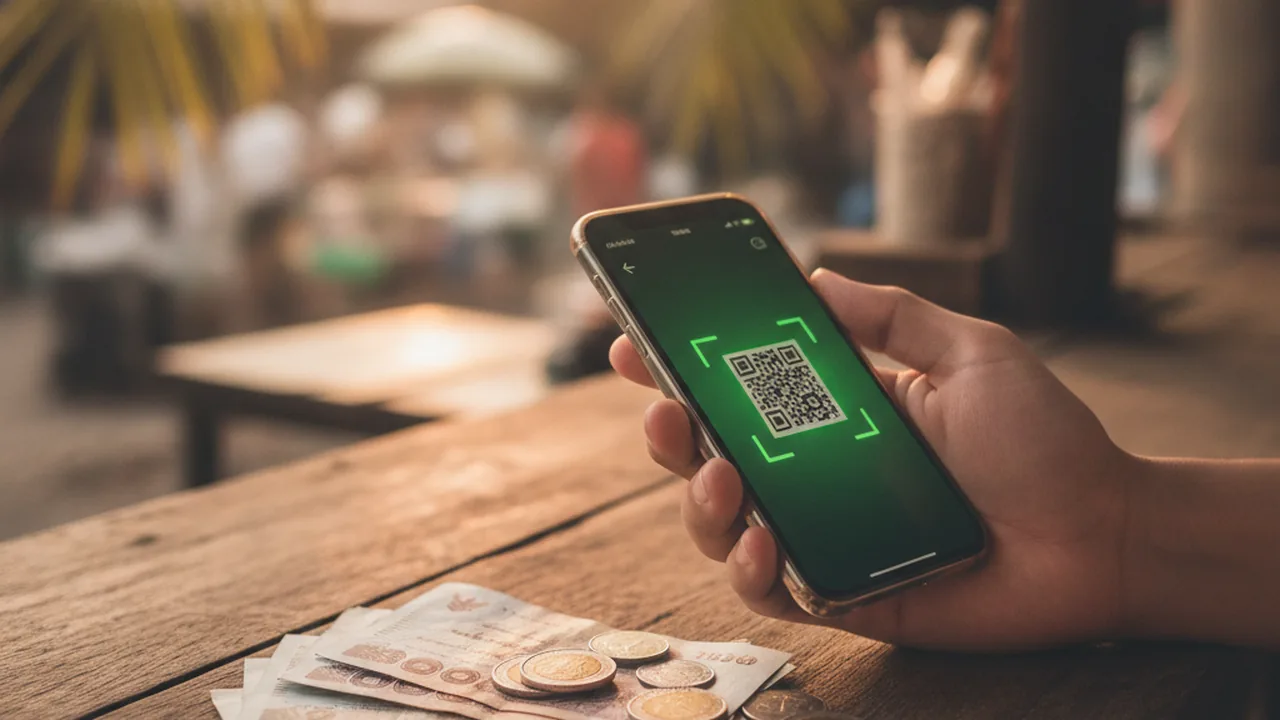
- Money. A card plus a little cash in baht for the first few hours — see our guide on paying in Thailand: cards, QR codes and cash.
- Copies of documents. Scans of your passport, insurance and bookings, stored separately from the originals, in case anything gets lost.
Clothing for Thailand: beach, city, temples
The climate is hot and humid year-round, so the basic rule is lightweight, breathable fabrics (cotton, linen) and as little synthetic material as possible. Beachwear alone isn’t enough, though — temples have their own dress code.
- Light t-shirts, shorts and dresses in natural fabrics for everyday wear.
- Modest clothing for temples: shoulders and knees covered — a thin long-sleeved shirt and light trousers or a long skirt.
- Swimwear and a compact microfibre towel — handy for island trips and waterfalls.
- Sandals for everyday use plus closed trainers for trekking and uneven pavements.
- A light cardigan or jacket — not for the weather outside, but for air conditioning on transport and in hotels.
- A compact raincoat — more reliable than an umbrella on a motorbike in the wet season.
- A sun hat and sunglasses — the sun is strong even on cloudy days.
First-aid kit, sun and insect protection
A minimal set: fever and pain relief, anti-diarrhoea remedies (oral rehydration salts, activated charcoal, loperamide), an antihistamine, a DEET- or picaridin-based repellent, and a water-resistant SPF 50+ sunscreen. For a full breakdown and what’s easier to buy locally, see our travel first-aid guide for the tropics.
Which medicines you can’t bring into Thailand
Check the contents of your home first-aid kit before you pack. Thailand strictly controls psychotropic and controlled substances, which includes medicines containing ephedrine — common cold remedies back home. Customs can raise questions over these, up to confiscation. If you need a prescription or strong medicine, carry a doctor’s prescription and a supporting note, and check the contents of unfamiliar medicines with a pharmacist in advance. For more on what’s illegal for tourists, see our guide to Thai laws and fines for tourists.
Power and gadgets
Thailand’s mains supply is 220V, 50Hz — the same as in many European countries, so you won’t need a voltage converter. Sockets are a mix of types A, B, C and sometimes O. A standard two-pin European plug (type C) usually fits without an adapter, but a grounded plug (Schuko-style) doesn’t always — a universal adapter is worth packing.
- A universal power adapter — useful if your devices have grounded plugs or you’re switching hotels.
- A power bank — for long transfers and days spent away from the hotel.
- An eSIM or local SIM for mobile data — plans and carriers are covered in our eSIM guide for Thailand.
What to pack by season (table)
The Andaman coast (Phuket, Krabi) and the Gulf of Thailand (Koh Samui) follow slightly different weather cycles — see the month-by-month breakdown in our Thailand weather by month guide. Below are the packing priorities for the three seasonal windows.
Packing priorities by season
| Season | Months | Packing priority |
|---|---|---|
| Cool and dry | November – February | A light cardigan for evenings and air conditioning; a raincoat isn’t essential |
| Hot and dry | March – May | As much breathable fabric as possible, extra sun protection, a hat |
| Rainy season | June – October | A raincoat, a waterproof pouch for electronics, quick-drying clothes |
On Koh Samui the rainy season shifts closer to October–December, while Phuket and Krabi usually see their heaviest rain between May and October.
What you don’t need to pack
- Large amounts of cash. Exchanging a large sum of foreign cash rarely gets you a good rate — it’s easier to withdraw baht from ATMs or pay by card.
- Heavy “winter” clothing. Even in the cool season, night-time temperatures rarely drop below 22–24°C — you don’t need jumpers or jackets, just a light cardigan for air conditioning.
- An oversized “just in case” medicine stash. Most common medicines are easy to buy at pharmacies in major towns and tourist areas; only pack what’s prescribed or needed in the first hours after landing.
- Bulky gadgets without a clear purpose. One universal adapter and one spare cable is usually enough.
YuSMP Travel editorial note
Building this checklist, we followed the same principle we use when matching destinations: if a point isn’t backed by verified data, we say so instead of guessing. That’s why the list above skips “just in case” items without a confirmed reason. We checked the wording on visas, the TDAC and restricted medicines against official sources — Thailand’s immigration service and embassy notices — and will update this article if the rules change.
Packing order: ahead of time, 3 days out, departure day
- Ahead of time: check your passport validity and the visa-free period that applies to you, buy insurance, book your hotel and flights, and fill in any gaps in your clothing and first-aid list.
- 3 days before departure: file the TDAC on the official site, exchange or withdraw some cash in baht, make copies of your documents, and check your home medicines for restricted substances.
- On departure day: charge your power bank and devices, pack the adapter in your carry-on (not checked luggage), and keep an offline copy of your insurance and TDAC confirmation.
Frequently asked questions
Do Russian travellers need a visa for Thailand in 2026?
Not for a short tourist trip: since 15 September 2026 a visa-free stay of 30 days applies. Longer trips require a visa — see our article on the visa rules.
What is the TDAC and when should I file it?
The TDAC is a digital arrival card, mandatory for all foreign tourists since 1 May 2025. It’s filed online at tdac.immigration.go.th no later than 72 hours before arrival, free of charge.
How long must my passport be valid to enter Thailand?
As a practical rule, at least 6 months from your entry date, with one blank page. Confirm the exact requirement with your own consulate before travelling.
Do I need a power adapter in Thailand?
The mains supply is 220V, 50Hz, so a voltage converter isn’t needed. A standard two-pin European plug usually fits without an adapter, while grounded plugs more often need one.
Which medicines can’t I bring into Thailand?
Psychotropic and controlled substances are strictly monitored, including medicines containing ephedrine — common cold remedies at home. Check your medicines in advance and carry a prescription for anything strong.
What should I wear to visit temples in Thailand?
Modest clothing: shoulders and knees covered — a long-sleeved shirt and long trousers or a skirt. Shorts and bare shoulders are usually turned away at temple complexes.
Entry rules and medicine restrictions change — check the latest requirements at tdac.immigration.go.th and with the Thai consulate before you travel.