YuSMP Travel Editorial Team
What's illegal in Thailand that tourists don't expect? A handful of rules carry real penalties — fines, confiscation, even arrest — rather than just a stern look. The toughest ones cover e-cigarettes, smoking on the beach, disrespecting the monarchy, and exporting certain items through customs. We break down each one below, with fine amounts only where they're officially confirmed, and a general caution where no specific figure exists. For a wider overview of the destination, start with our Thailand guide, which covers season, visas and money.
Most of what follows won't affect a traveller who behaves like an ordinary visitor: respectful of local customs, without a vape in their bag, and without trying to settle anything with police using cash on the spot. Still, it's worth knowing the specifics — especially around vapes and beach smoking, where fines are real and actually enforced. For the broader country context, see our Thailand guide for travellers.
Vapes and e-cigarettes — a total ban
Thailand bans the import, sale and use of e-cigarettes and vapes outright — the ban has been in force since 2014 and covers every type of device, including disposables. The rule isn't limited to buying one locally: a vape found in your luggage at the border can be legally confiscated, and the owner faces a fine of up to roughly 30,000 baht. In some cases arrest is possible, especially if several devices are found along with signs of intent to resell them. The ban is confirmed on the Royal Thai Embassy, Moscow website.
Customs at Phuket and Bangkok regularly seize vapes specifically from tourists who didn't know about the ban. If you've got one with you anyway, keep it out of sight in public places and don't try to buy vape liquid locally either — selling it is just as illegal as using it.
Smoking on the beach
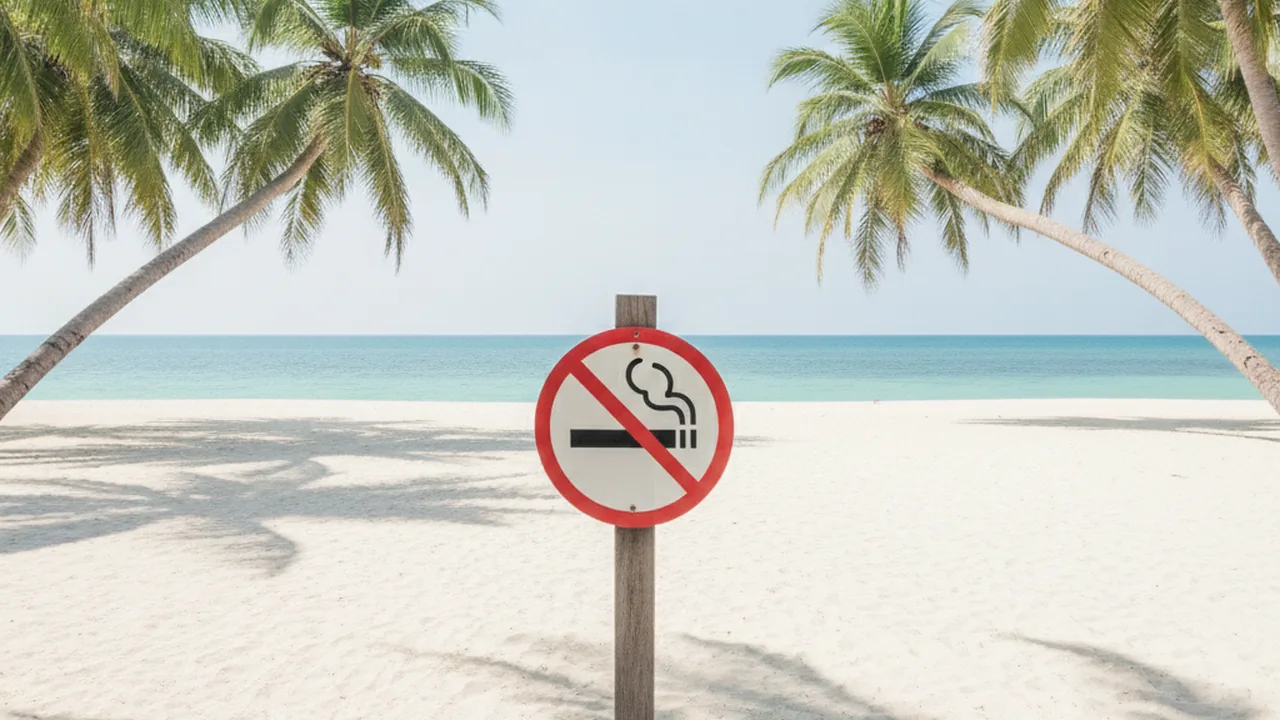
Since 31 January 2018, Thailand has enforced a smoking ban on designated stretches of beach, introduced to keep the coastline clean and safe for everyone. The rule covers popular tourist zones, including beaches on Phuket, Pattaya and Koh Samui; violations carry a fine, and cigarette butts left in the sand are treated as litter in their own right. The ban is confirmed by the Royal Thai Embassy.
Enforcement is uneven: some beaches post signs and have volunteers patrolling, others only have ashtrays as a reminder. The safer approach is to smoke only in designated areas (usually marked) rather than assume a particular beach isn't being checked.
The monarchy and its symbols (Section 112)
Section 112 of Thailand's Criminal Code (lèse-majesté) punishes insulting the monarch, queen, heir or regent with a prison term of 3 to 15 years per offence. This covers more than public statements — it also includes social media posts, jokes made to locals, and acts involving images of the king, such as defacing banknotes bearing his portrait. Stepping on a coin or banknote, tearing it, or crumpling it demonstratively is also read as a sign of disrespect and can trigger a serious response.
The practical takeaway: topics related to the monarchy simply aren't discussed in Thailand — not as a joke, not in comments under someone else's post. This isn't a cultural suggestion but a zone of real legal risk, and the law applies to foreigners too.
In temples and around Buddha statues
Thai Buddhist temples run on a set of behavioural norms that aren't always backed by a fine, but breaking them can get you politely — and firmly — asked to leave. The basics: covered shoulders and knees at the entrance, shoes off before entering a hall with a Buddha image, and feet never pointed at a statue or a monk, which reads as an insult. Sitting higher than a Buddha statue — climbing onto a pedestal for a photo, say — is strictly off-limits.
A separate rule applies to monks: women must not touch a monk, hand him anything directly, or sit next to him on the same bench — anything passed to a monk goes through a third person or on a tray. This rule is observed strictly even at the most touristy temples.
Customs: what you can't take out of the country
Thai customs bans exporting sand or soil from beaches, as well as items made from sea turtle shell — both rules exist to protect the coastal ecosystem and are confirmed on the Thai Customs Department website. The same logic extends to protected species in general: any souvenir made from parts of a protected animal or plant risks being seized at the border, with the exporter facing consequences.
Corals and seashells sit in a riskier grey zone: some species are protected, and a tourist can't reliably tell a protected shell from an ordinary one by sight. There's no single confirmed fine amount specifically for shells or coral in official sources — in practice, the customs officer decides on the spot — so the safest move is not to take anything living, or anything resembling shell or coral, off the beach, and to check the rules directly with Thai customs before you fly.
Drugs
Thailand runs one of the strictest anti-drug policies in the region, and that covers more than the obvious banned substances — it extends to some that are legal or loosely regulated elsewhere. Thailand's partial cannabis legalisation doesn't mean free circulation for tourists; importing, possessing or using it outside the permitted formats remains a serious risk. Consequences for being caught with banned substances range from heavy fines to long prison sentences, up to the harshest charges for large quantities.
The advice is simple: don't bring any of this with you and don't buy it locally, even if a seller or a local acquaintance insists "everyone does it here." Border and customs checks at Thai airports use dogs and scanners, and "legal back home" offers no protection in Thailand.
Violations with a confirmed fine or penalty
| Violation | What's banned | What you risk | Source |
|---|---|---|---|
| Importing a vape/e-cigarette | carrying or possessing the device across the border | confiscation of the device, a fine up to 30,000 baht, possible arrest | Royal Thai Embassy, Moscow |
| Selling or using a vape | buying liquid/a device, vaping anywhere in the country | a fine up to 30,000 baht, confiscation, possible arrest | Royal Thai Embassy, Moscow |
| Smoking on the beach | smoking outside designated zones on certain beaches (since 31 Jan 2018) | a fine, amount set by the local beach authority | Royal Thai Embassy, Bucharest |
| Exporting sand or soil | taking sand/soil out of Thailand | confiscation, administrative liability | Thai Customs Department |
| Sea turtle shell items | exporting items made from sea turtle shell | confiscation, liability under species-protection law | Thai Customs Department |
What to do if you broke a rule without realising it
If it's already happened — you were stopped with a vape, caught smoking on a closed beach, or an awkward joke caused a run-in — the first and most important rule is not to try to settle things "on the spot" with cash. That won't speed anything up; it creates a risk of a bribery charge, which is far more serious than the original violation.
The right order of steps: contact your hotel or guide (larger hotels have handled this before and keep contacts for it), call the Thai Tourist Police on 1155 if needed (they operate in English nationwide), and notify the Russian consulate if things escalate to an actual detention. Signing documents in Thai without a translation or a consul present is a bad idea even if the situation looks minor.
If the issue involves a visa or length of stay, check our guide Thailand Visa Rules for Russian Travellers; money matters on the ground are covered in How to Pay in Thailand, and picking the right time to travel is easier with Thailand Weather by Month. If you haven't settled on a destination yet and want to compare options, try our destination match tool.
Frequently asked questions
Can I bring a vape into Thailand in transit?
Technically the ban covers importing a device into Thailand, and transit through an airport's international zone without leaving for the city usually isn't treated as import. But the risk of a device being found during a baggage check doesn't disappear, and rules get applied inconsistently — it's safer not to bring a vape on a Thailand trip at all, even for a layover.
What happens if you smoke on a beach outside a designated resort zone?
The ban technically applies to specific beaches where it's in force, not the entire coastline — but it's hard for a tourist to know the exact boundaries on the ground. It's safer to rely on posted signs and smoke only in designated smoking areas.
Can I joke about the king on social media during my trip?
No. Section 112 applies to foreigners too, and "it was just a joke" carries no legal weight. Any posts, comments or reposts about Thailand's monarchy during your trip sit in a zone of real risk.
Do I need an international licence to rent a bike or car?
Yes — to drive in Thailand, a foreigner typically needs an International Driving Permit alongside a valid licence in the relevant category from home; check the exact requirements and the fines for not having one with local police or the rental company before you travel.
Can I take seashells home from the beach as a souvenir?
There's no blanket "yes" or "no" without knowing the species — some shells are protected, and you can't tell by looking. It's safer not to collect shells or coral from the beach as souvenirs and to check the export rules directly with Thai customs.
Rules and fines can change — before your trip, check the latest requirements on the Royal Thai Embassy or consulate website.