YuSMP Travel Editorial Team
What you can't do in Vietnam is worth settling before you fly, not after your first encounter with the police. The country has zero tolerance for drugs and drink-driving, a tough new vape ban with specific fines, and rules for temples, beaches and drones that tourists break by accident more often than on purpose. We break down each one below, with figures where they're officially confirmed, and a general caution where no specific number is published. For a wider overview of the destination, start with our Vietnam guide, which covers season, visas and money.
Most of what follows won't affect a traveller who behaves like an ordinary visitor: no vape in the bag, no flying a drone near a military site, and no trying to settle anything with police using cash on the spot. Still, it's worth knowing the specifics — especially around vaping and drink-driving, where the consequences are real and actually enforced. For the broader country context, see our complete Vietnam guide, and for visa details, our piece on the Vietnam e-visa.
Vapes and heated-tobacco devices
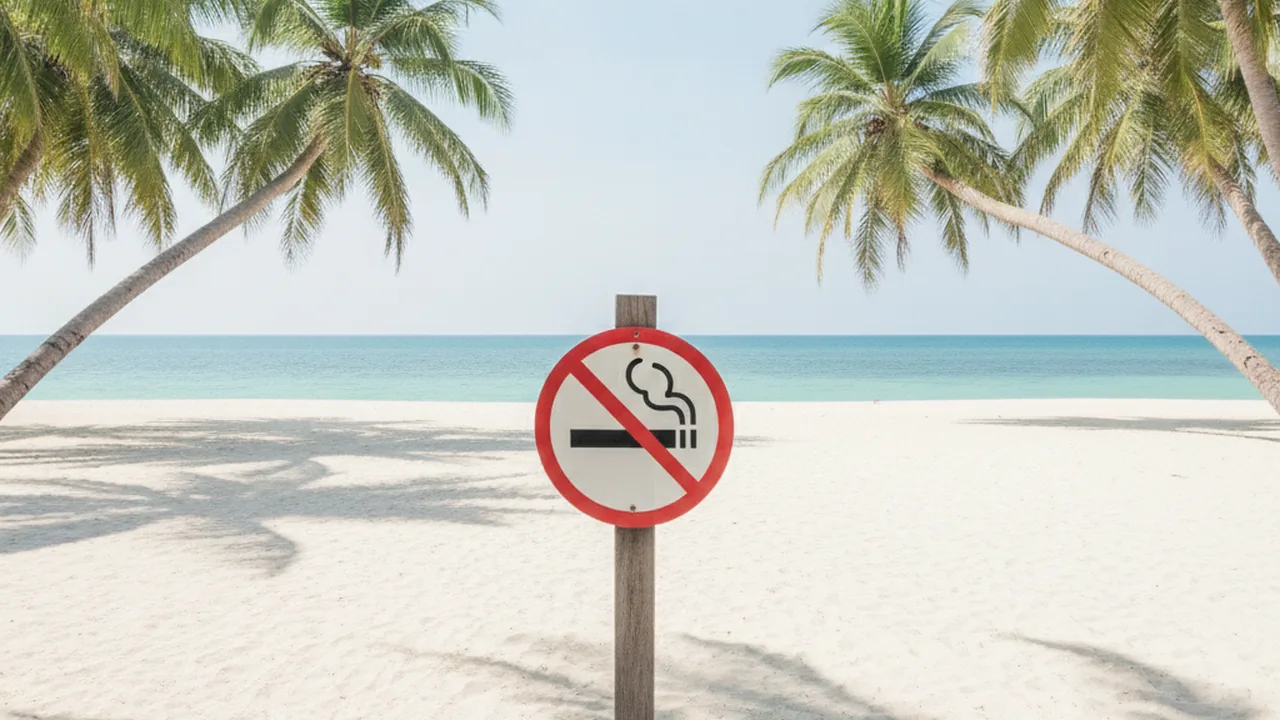
Since 1 March 2026, Vietnam has banned the sale, purchase, import and use of e-cigarettes, vapes and heated-tobacco devices (IQOS, GLO, Ploom and similar) — devices are confiscated on discovery. Decree 90/2026/ND-CP, which took effect on 15 May 2026, introduced specific administrative fines: 3–5 million dong for the smoker themselves, and 5–10 million dong for anyone who allows a device to be used on their premises — a hotel, cafe or bar. There's no personal tourist exemption: a device found in your luggage at customs means confiscation and a possible on-the-spot fine.
In practice, this means leaving a habit that's legal in several other Asian countries at home entirely — including spare pods and e-liquid. Hiding a device on entry is risky: customs checks luggage selectively, but there's no way to predict when.
Drugs
Vietnam's drug laws are among the strictest in the world, and there's no exception for tourists, "small amounts," or cannabis, which is legal in a number of other countries. Possession, use, distribution or production of banned substances can carry penalties up to the death penalty for large quantities — the exact consequence depends on the amount involved and the detainee's role. An added risk is counterfeit substances, which circulate at tourist markets and are dangerous regardless of the legal consequences.
The advice is simple: don't bring any of this with you and don't buy it locally, even if a seller or local acquaintance insists "it's fine here." Airport checks use dogs and scanners, and "legal back home" offers no protection in Vietnam.
Alcohol and riding a motorbike
Vietnam enforces zero tolerance for drink-driving, and that formally includes motorbikes — the most common form of transport for tourists. Even one beer before riding a scooter can lead to the bike being impounded on the spot and a fine; per travel-industry sources, the fine runs to roughly 8 million dong, with the exact figure depending on blood-alcohol level and the specific province. There's no single official tourist-facing figure — this is enforcement practice rather than a primary legal text, but travellers run into it regularly.
Licensing is a separate issue: riding a motorbike in Vietnam requires a licence in the relevant category, usually alongside an International Driving Permit. Without them, insurance — if you have any — won't cover an accident, and the bike itself can be impounded during a document check regardless of sobriety.
Temples and beaches
Vietnam's pagodas and Buddhist temples follow the dress-code standard for the region: covered shoulders and knees, shoes removed before entering a hall with statues. Major touristy pagodas enforce this almost every time; smaller village temples are more relaxed, but the rule itself doesn't change, and breaking it disrespects a place that matters to local residents.
On beaches, topless sunbathing isn't accepted and can carry a fine in some cases — this isn't a blanket Southeast Asian norm but a local cultural and legal line. Prostitution is prosecuted under Vietnamese law and covers liability for the client as well as the seller — a common misconception that only one side carries the risk doesn't hold up.
Drones and photography
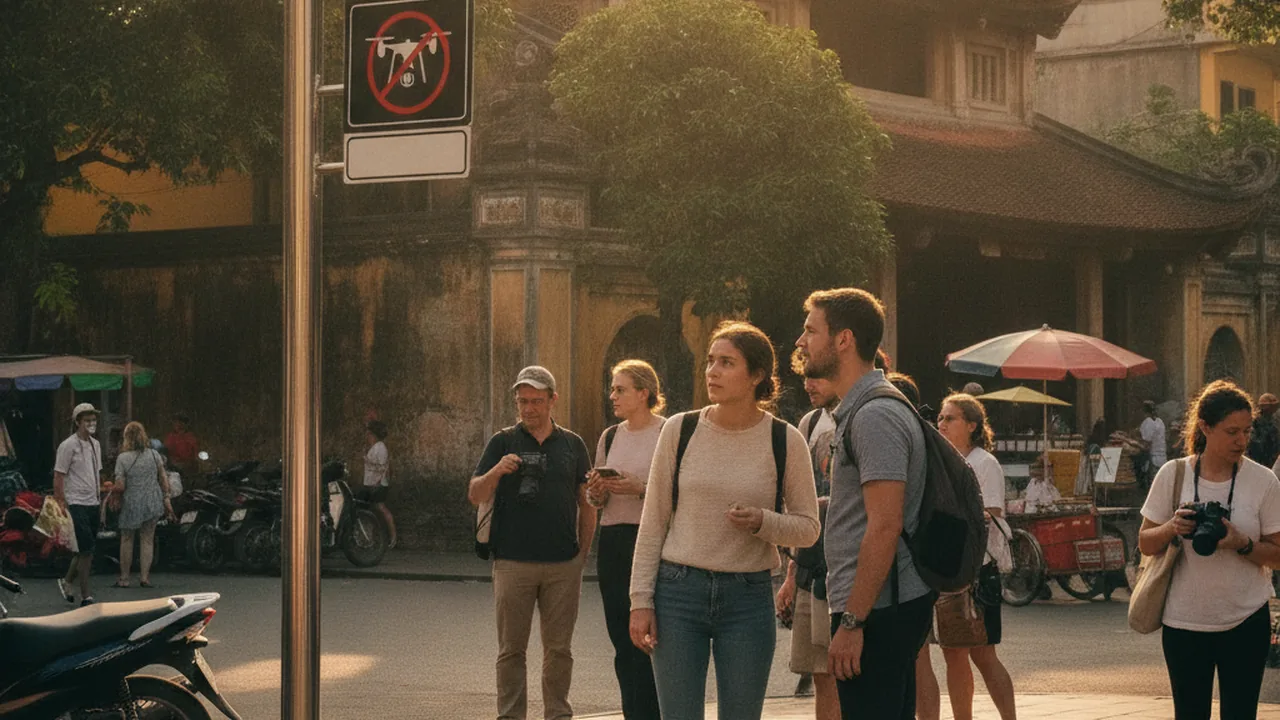
Drone flights in Vietnam without a separate permit from the Ministry of National Defence are banned, and a permit is required for each individual flight rather than once for your whole trip. Per travel-industry sources, the fine for an illegal flight can run to roughly 30 million dong (around $1,200 at autumn-2026 exchange rates); this is an industry estimate rather than a primary legal figure, but it gives the right order of magnitude.
Photographing military sites, airports and some government buildings is strictly off-limits regardless of whether you're using a drone — an ordinary smartphone camera falls under the same restriction.
Nature and customs
Breaking coral, collecting shells or sand from protected coastlines, and picking flowers in protected areas are all banned — and whatever you collect won't make it through customs anyway, since such items are checked specifically, adding an export ban on top of a possible fine.
At the border, you can bring in up to 2 litres of alcohol and 200 cigarettes per person without declaring them; cash amounts over US$5,000 (or the equivalent in another currency) must be declared. Importing drugs, weapons and pornographic material is banned — this covers not just the obvious cases but borderline ones too, such as films for personal use with an unclear status. Russian citizens don't need a visa for a short trip — the visa-free period runs up to 45 days; for details on terms and extensions, see our piece on the Vietnam e-visa.
Fines and consequences for tourists in Vietnam (estimate, 2026)
| Violation | Fine/consequence | Source |
|---|---|---|
| Using a vape/heated-tobacco device | 3–5 million dong + device confiscated | Decree 90/2026/ND-CP |
| Allowing vape use on your premises (hotel, cafe) | 5–10 million dong | Decree 90/2026/ND-CP |
| Drink-driving a motorbike | bike impounded + fine, estimate ~8 million dong | travel-industry sources |
| Illegal drone flight without a permit | fine, estimate up to 30 million dong | travel-industry sources |
| Possession/use of drugs | criminal liability — from a heavy fine up to the death penalty in severe cases | US Department of State, Vietnamese law |
| Topless sunbathing (serious cases) | fine, estimate up to several thousand dollars | travel-industry sources |
What to do if you broke a rule
If it's already happened — you were stopped with a vape, caught riding a motorbike while drunk, or ran into trouble over a drone — the first rule is not to hand cash directly to the officer and not to try to settle things "on the spot." That creates a risk of a bribery charge, which is legally more serious than the original violation.
The right order of steps: ask for an official report and receipt, contact your hotel or tour operator (larger hotels have handled this before), and notify the Russian consulate if needed, especially if things escalate to a detention. Signing documents in Vietnamese without a translation or a consul present is a bad idea even if the situation looks minor. For money matters on the ground, see How to Pay in Vietnam, and if you're comparing destinations, see Vietnam or Thailand: Which Should You Choose.
Frequently asked questions
What happens if you're caught with a vape in Vietnam?
E-cigarettes and heated-tobacco devices have been banned for sale, purchase, import and use in Vietnam since 1 March 2026, and devices are confiscated on the spot. Under Decree 90/2026/ND-CP, the smoker themselves faces a fine of 3–5 million dong, and anyone who allows a device to be used on their premises (hotel, cafe) faces 5–10 million dong. There's no personal tourist exemption.
Can I bring medication containing codeine or strong painkillers?
Vietnam's drug laws are among the strictest in the world and make no exception for tourists. It's safer to declare prescription medication containing strong active substances and carry the original prescription from your doctor — or check the status of a specific drug with the embassy before you travel.
Are temple dress codes strictly enforced?
At major, touristy pagodas — yes: covered shoulders and knees, plus shoes removed before entering the hall, are checked at the entrance almost every time. Smaller village temples are more relaxed about enforcement, but the rule itself doesn't change.
Do I need a licence to rent a motorbike or scooter?
Yes — to ride a motorbike in Vietnam, a foreigner needs a licence in the relevant category and, typically, an International Driving Permit; without them insurance (if you have any) won't cover an accident, and the bike itself can be impounded during a document check.
What should I do if a police officer asks for a fine on the spot?
Don't hand cash directly to the officer and don't try to settle things "on the spot" — that creates a risk of a bribery charge, which is legally more serious than the original violation. The right move is to ask for an official report and receipt, contact your hotel or tour operator, and, if it's serious, notify the Russian consulate.
Can I fly a drone at Vietnam's beach resorts?
Drone flights without a separate permit from Vietnam's Ministry of National Defence are banned, and a permit is required for each individual flight. Per travel-industry sources, the fine for an illegal flight can run to roughly 30 million dong.
Rules and fines can change — before your trip, check the latest requirements on travel.state.gov or with your tour operator.