YuSMP Travel Editorial Team
Paying your way around Vietnam in 2026 comes down to three tools: VietQR payments through Sberbank Online or VTB wherever a business accepts them, a card or account from a foreign (non-Russian) bank if you have one, and cash dong for everything else. A Mir card plays a narrow role here — it's useful only for withdrawing cash at Vietnam-Russia Bank ATMs — while Visa and Mastercard cards issued by Russian banks aren't accepted at all. For the bigger picture on the destination, see our Vietnam overview, and for entry rules, our guide to the Vietnam e-visa.
Direct answer: what actually works in Vietnam in 2026
The combination that works for a Russian traveller is a VietQR payment through Sberbank Online or the VTB app wherever a business accepts that QR standard, a card or wallet from a foreign bank (if you have one) almost everywhere else, and cash dong for anything the first two don't cover. A Mir card isn't usable for purchases — it only works for cash withdrawals at specific ATMs.
- VietQR via Sberbank Online or VTB — for payments at businesses that accept this QR standard;
- a card or wallet from a foreign bank — works almost everywhere, like any other foreign card;
- cash dong — essential for markets, street food, private guides and taxis outside the main ride-hailing apps;
- a Mir card — cash withdrawal only, at Vietnam-Russia Bank (VRB) ATMs; not accepted for purchases.
For the wider picture on paying abroad, not just in Vietnam, see “How Russians Can Pay Abroad”. First trip to Vietnam? The complete Vietnam guide and weather by month are useful starting points, and our destination match tool can help pick your dates.
Do Russian cards work in Vietnam?
Visa and Mastercard cards issued by Russian banks aren't accepted in Vietnam — not at a shop terminal, not for contactless payment, and not for online hotel or flight bookings. The reason is the same as elsewhere: these cards have no access to international payment systems outside Russia, so the transaction simply doesn't clear at any stage of authorisation.
A Mir card works a little differently in Vietnam than in most other destinations popular with Russian travellers: it isn't accepted in shops, restaurants, taxis or online, but it can be used to withdraw cash dong — at specific Vietnam-Russia Bank (VRB) ATMs. More on that in the VRB section below.
If you hold an account, card or digital wallet with a foreign (non-Russian) bank, most of this stops being an issue — it works in Vietnam like any other foreign card, including contactless payments. If you don't have one, VietQR through a Russian bank, Mir withdrawals at VRB, and cash are what's left.
Paying by VietQR via Sber and VTB
How to pay via Sberbank Online
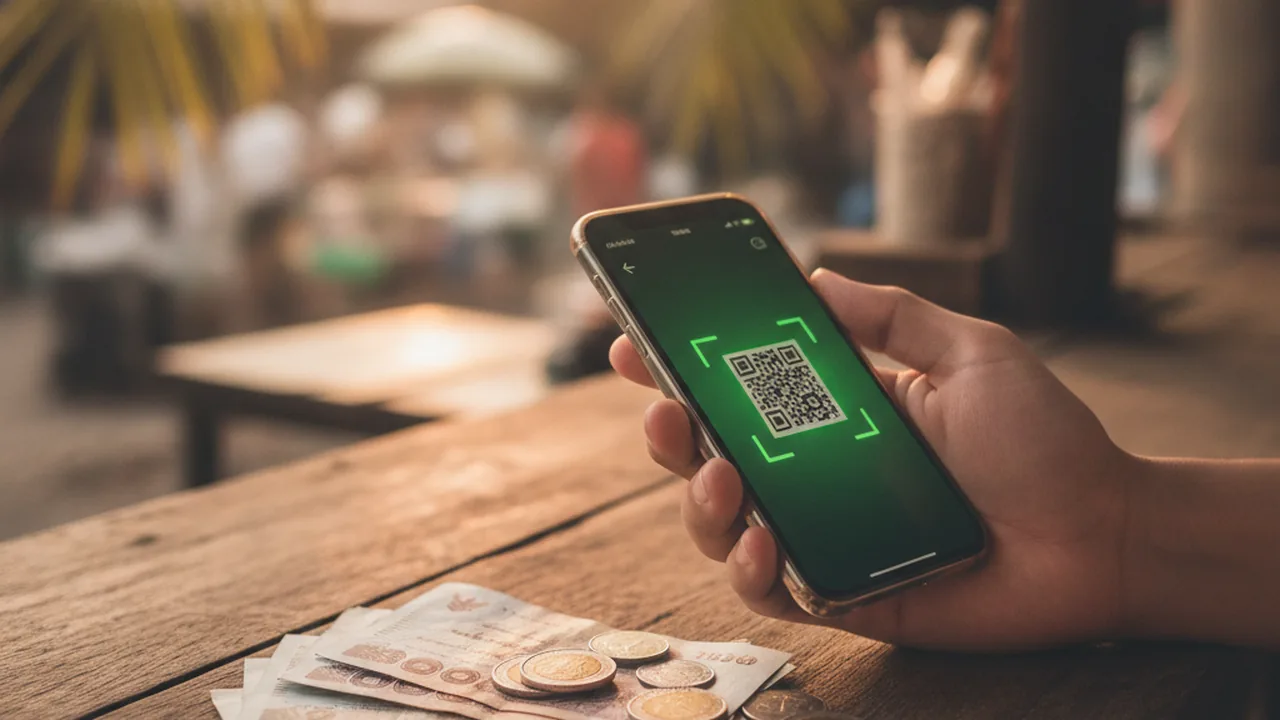
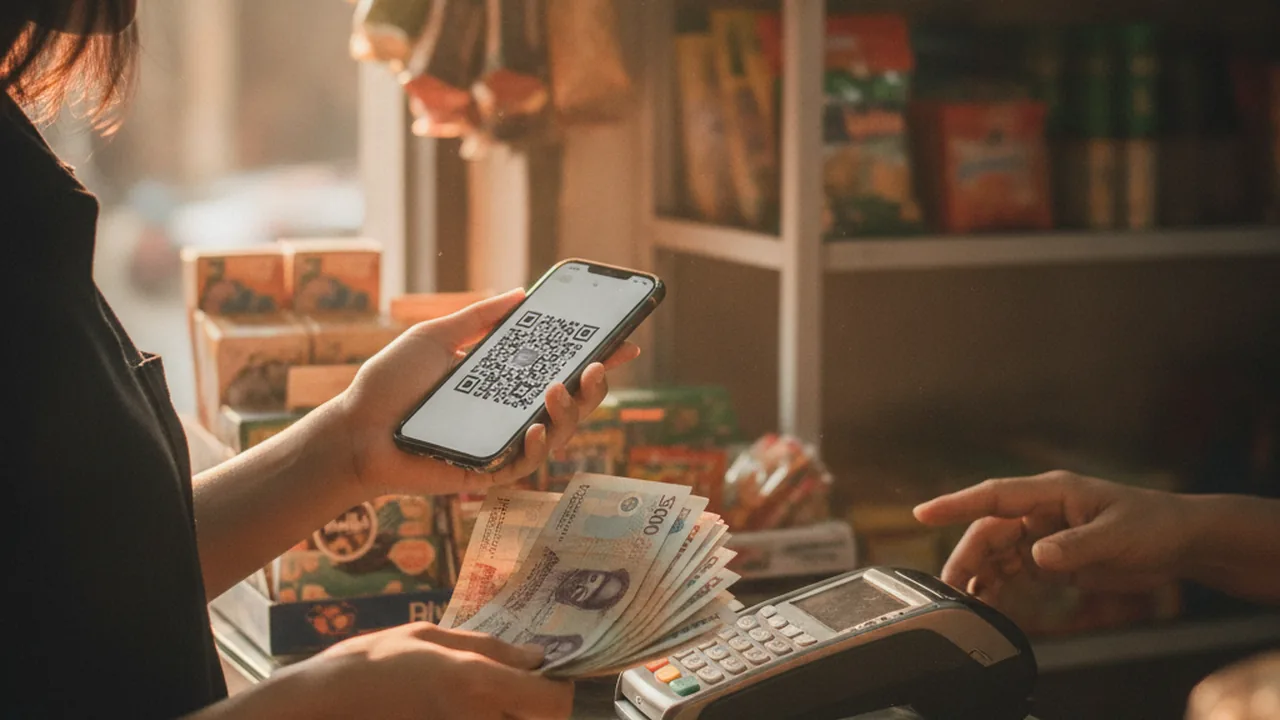
Sberbank launched QR code payments in Vietnam in November 2025 — Vietnam became the 8th country abroad where this feature works in the "Sberbank Online" app. The flow for a traveller is simple: in the QR payment section you scan the code at the till, the app recognises it as a Vietnamese VietQR code, shows the amount in dong and its rouble equivalent at the bank's rate for the day, and debits roubles from your account once you confirm — no card, no cash withdrawal needed. According to the bank, the feature is available at more than 1 million merchant locations across Vietnam — shops, hotels and restaurants.
VTB and other banks
VTB rolled out VietQR payments at the same time as Sberbank, in November 2025 — both features launched simultaneously. Other banks are adding support for the standard gradually, so check your own bank's app before you travel to see whether it covers VietQR payments in Vietnam as of your departure date; if it doesn't, plan on a foreign card or cash as your main method.
Where VietQR doesn't work
VietQR payments need a mobile data connection — without it, the app can't process the payment. The feature also doesn't always help with online hotel prepayment or with apps like Grab, which typically require a card — and a Russian-issued card won't work there, so you'd need a foreign bank account or another funding method.
Mir cards and VRB ATMs: how much and how to withdraw
Mir cards in Vietnam are only accepted at Vietnam-Russia Bank (VRB) ATMs — by various estimates, there are around 20 of them nationwide, located in Hanoi, Da Nang, Nha Trang, Ho Chi Minh City, Vung Tau and Hai Phong. That's considerably fewer than the ATM network of any major local bank, so it's worth checking in advance whether a VRB ATM is near where you'll be staying.
The per-transaction withdrawal limit is generally in the range of 3–5 million dong (roughly 9,000–15,000 roubles at the exchange rate on the day) — the exact figure depends on your Mir card issuer's terms and can vary. VRB itself typically doesn't charge a withdrawal fee, but the dong-to-rouble conversion set by your card-issuing bank is often 3–5% worse than the market rate, so total losses on a single withdrawal can run up to 5–7%.
The bigger practical risk isn't the fee — it's availability: there aren't many VRB ATMs, and they occasionally fail on foreign-card transactions. Relying on a Mir card as your only source of cash in Vietnam is risky — treat it as a backup rather than a primary method.
ATMs and cash dong for a foreign card
If you hold a card or account with a foreign (non-Russian) bank, withdrawing cash in Vietnam works the same way it would in any other country: the ATM network is extensive, and international cards are accepted almost everywhere, including at airports and tourist cities.
You'll need cash dong regardless of which card you use — for markets, street food, private guides, taxis outside the main ride-hailing apps, and small shops outside tourist areas, where VietQR and cards usually aren't an option.
Table: comparing payment methods
Payment methods in Vietnam compared
| Method | Where it works | Fee reference | What to watch for |
|---|---|---|---|
| VietQR via Sber/VTB | Shops, restaurants, hotels, supermarkets — reportedly >1 million locations | Conversion at your bank's rate | Needs mobile data; doesn't cover everywhere or online bookings |
| Card/wallet from a foreign bank | Almost everywhere, like any foreign card | Set by your own bank | Requires an account outside Russia |
| Cash dong | Markets, street food, private guides, taxis outside the main apps | — | You need to carry it; loss or theft risk |
| Mir card (VRB ATM withdrawal) | Only Vietnam-Russia Bank ATMs (~20 nationwide) | Issuer conversion often 3–5% worse than market rate | Not usable for purchases — withdrawal only; ATMs are scarce and occasionally fail |
| Russian bank card (Visa/Mastercard) | Doesn't work | — | Not processed by international payment systems outside Russia |
What to do if a payment or withdrawal fails
A failed VietQR payment is usually a technical delay in confirmation from the payment partner on the Vietnamese side — the debited amount typically returns to your account within seconds. If a payment won't go through, don't keep retrying — switch to a backup method (cash, or a foreign card if you have one) and check your balance a little later.
If a VRB ATM returns an error on a Mir card withdrawal, don't keep trying the same ATM repeatedly — that risks a temporary block from the card-issuing bank. Try a different VRB ATM instead, or visit a bank branch.
Bank rules and fees change — check the current terms in your own bank's app before you travel.
Frequently asked questions
Can I pay with a Russian Visa or Mastercard in Vietnam?
No. Visa and Mastercard cards issued by Russian banks aren't processed by international payment systems outside Russia — neither at terminals nor online, regardless of the issuing bank.
Does a Mir card work in Vietnam?
Not for purchases — Mir isn't accepted in shops, restaurants, taxis or online. The one thing it does is withdraw cash dong at Vietnam-Russia Bank (VRB) ATMs, of which there are around 20 nationwide.
How do I pay by VietQR through Sberbank Online?
In the app, choose QR payment and scan the code at the till — it shows the amount in dong and roubles at the bank's rate, and once you confirm, the money is debited from your account. The feature launched in November 2025.
How much does it cost to withdraw dong with a Mir card at a VRB ATM?
VRB itself typically doesn't charge a withdrawal fee, but the dong-to-rouble conversion set by your card-issuing bank is often 3–5% worse than the market rate, so total losses on a withdrawal can run up to 5–7%.
How much cash dong should I bring to Vietnam?
Keep a buffer for a couple of days ahead — for markets, street food, private guides and taxis outside the main apps, and in case a VietQR payment temporarily fails.
Does VietQR work at hotels and on Grab?
Not always. Online hotel prepayment and Grab usually require a card, and a Russian-issued card won't work there — VietQR doesn't help in those cases.