YuSMP Travel Editorial Team
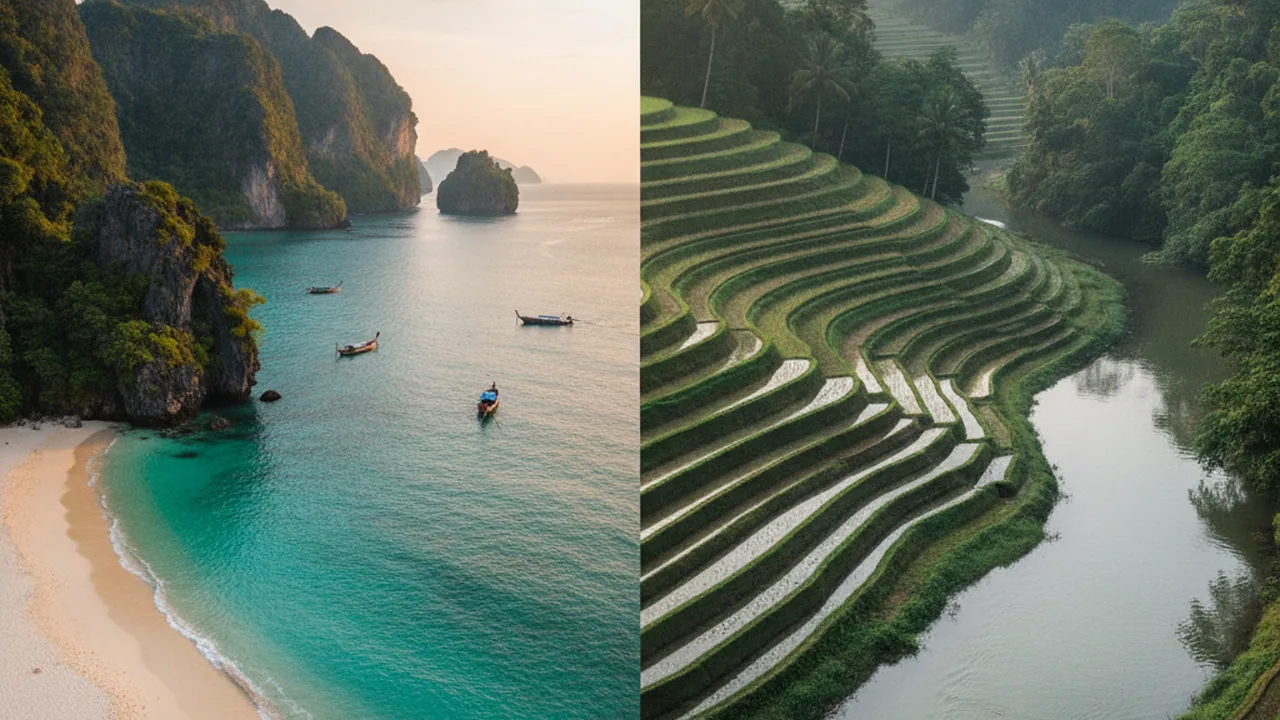
Vietnam or Thailand: which should you choose if you've only got one trip to Asia and both countries look equally appealing? The short answer depends on what matters most to you: beaches with well-established tourist infrastructure point to Thailand, while a lower budget and more varied scenery point to Vietnam. For a quick overview of either country, start with our Thailand guide or Vietnam guide — both cover the basics on season, visas and flights.
If you're unsure which country suits your travel style, our destination match tool can narrow it down in a few questions. But even without it, the difference between the two countries comes down to a handful of practical criteria: visas, budget, beaches, food and infrastructure. We'll go through them one by one, then answer the questions travellers ask most — including whether you can combine both countries in one trip.
Short answer: who should pick Thailand, who should pick Vietnam
Thailand suits travellers heading to Asia for the first time who want well-developed tourist infrastructure, a wide choice of hotels at every level, and a familiar beach holiday with few surprises. Vietnam is the better fit if a lower budget and varied scenery — from beaches to mountain terraces — matter more to you than polish. In one phrase: Thailand is about comfort and predictability, Vietnam is about variety and value.
Visas and entry
Entry rules for Russian citizens have changed in both countries over the past year, and the gap between them is now significant. In Thailand, as of 15 September 2026, the visa-free stay for Russian citizens was cut to 30 days — the country reverted to the terms of its 2005 bilateral agreement (the previous visa-free period was 60 days). Travellers who entered before 15 September under the old terms keep the stay length stamped at entry. Current conditions are published on the official Thai Ministry of Foreign Affairs site (mfa.go.th); a full breakdown is in our guide Thailand Visa Rules for Russian Travellers.
Vietnam's visa-free regime is more generous: under Resolution 44/NQ-CP, Russian citizens can stay visa-free for up to 45 days, and the rule applies from 15 March 2025 to 14 March 2028 regardless of passport type or purpose of travel. Leaving and re-entering resets the count, which is handy if you're combining Vietnam with neighbouring countries in the region. If you plan to stay longer than 45 days, you'll need a visa — apply in advance on the official evisa.gov.vn portal; see our guide Vietnam e-visa: how to apply and avoid mistakes for the process.
Visas and entry for Russian travellers: Thailand vs Vietnam
| Country | Visa-free stay | In effect since | What's next if you need longer |
|---|---|---|---|
| Thailand | 30 days | since 15 September 2026 | visa in advance or at a consulate |
| Vietnam | 45 days | since 15 March 2025 (until 14 March 2028) | e-visa via evisa.gov.vn |
How much the trip costs
By most travellers' general impression, Vietnam runs cheaper than Thailand on average — street food, local transport and most activities cost less, though the gap narrows in heavily touristed areas on both sides (Phuket, Nha Trang). For exact day-to-day prices by month of travel, see our guide How much a winter in Asia costs, which breaks costs down by country with a note on which month the figures apply to. The general rule: if budget is your main deciding factor, Vietnam usually wins, especially away from the busiest tourist towns.
Beaches and nature
Thailand
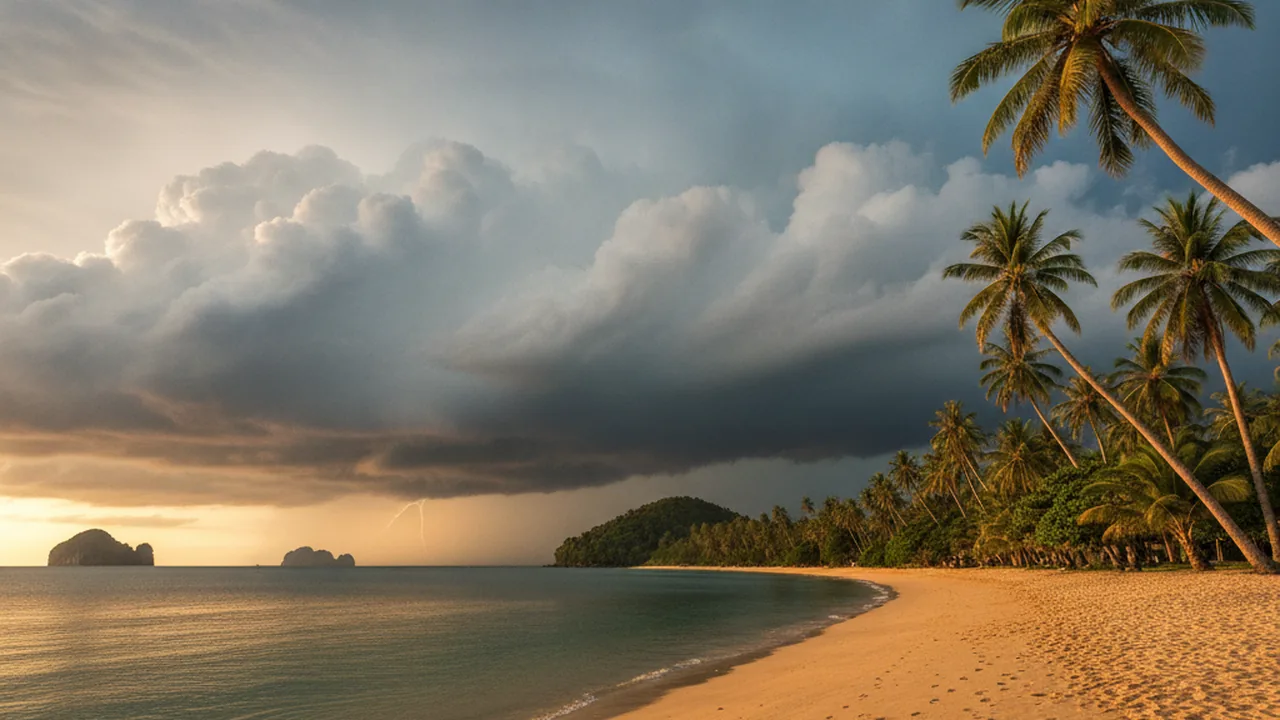
Thailand has the edge on recognisable beach scenery: the limestone cliffs of Krabi and Phi Phi, the turquoise water of the Andaman Sea, and solid infrastructure for diving and snorkelling. Koh Samui, in the Gulf of Thailand, runs on its own rhythm — quieter and somewhat less crowded than Phuket.
Vietnam
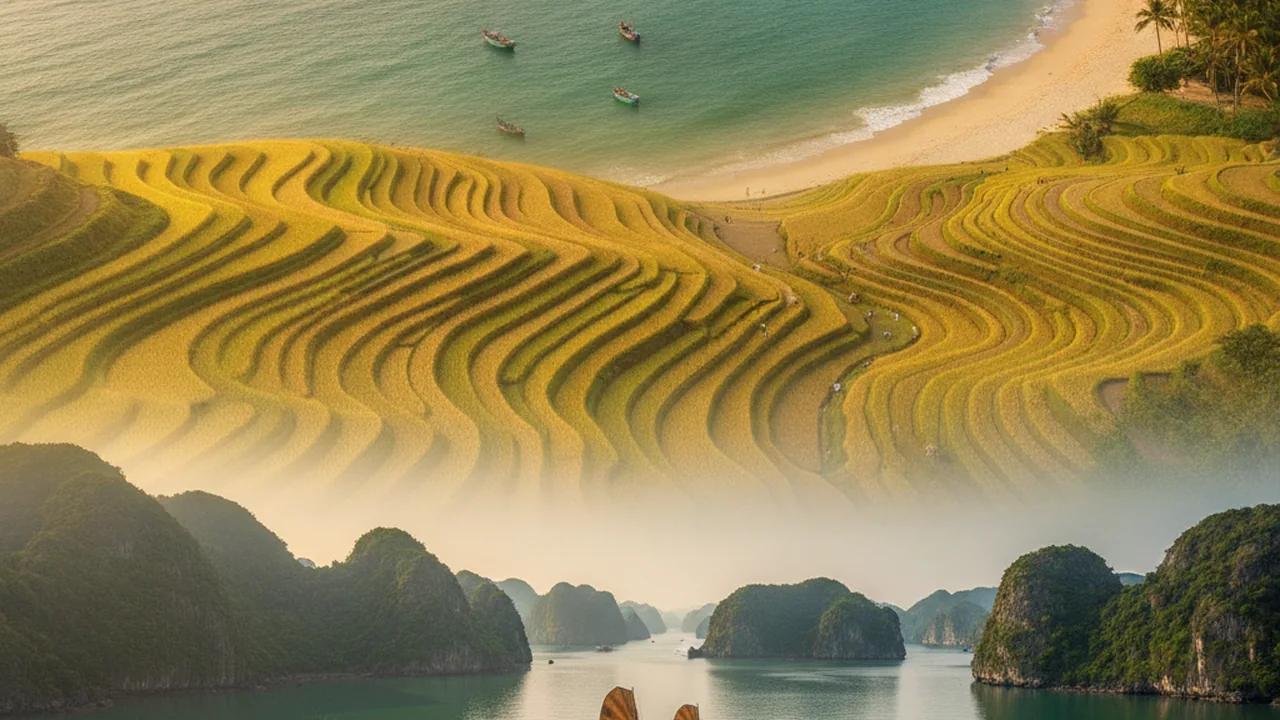
Vietnam offers more than beaches (Nha Trang, Phu Quoc, Da Nang) — it has terrain Thailand simply doesn't: the rice terraces of Sapa, Halong Bay's limestone islands, and the mountain roads of the north. For travellers who want to mix beach time with active sightseeing within a single trip, Vietnam offers more contrast inside one country.
Food and culture
Thai cuisine is spicy, vibrant, built on coconut milk and a familiar set of dishes that are easy to find anywhere and rarely lose their flavour when adapted for tourists. Vietnamese food is lighter and herb-forward (pho, banh mi, spring rolls), with a noticeable French colonial layer in the architecture and coffee culture of the bigger cities. In terms of atmosphere, Thailand feels more "tourist-smooth" — service and English signage are everywhere; Vietnam asks for a bit more willingness to improvise, especially outside Hanoi and Ho Chi Minh City.
Infrastructure and nightlife
Thailand has welcomed mass tourism for decades, and it shows: hotels at every level, transfers, tour operators and nightlife (Patong in Phuket, Bangkok's districts) are all geared towards a first-time foreign visitor. Vietnam is catching up fast on tourist numbers, but its infrastructure is in places less polished — and prices for the same level of comfort are usually lower. If this is your first independent trip to Asia and minimising surprises matters, that's a small but real point in Thailand's favour.
Where to go with kids, and where for a quiet holiday
Travelling with children is generally easier in Thailand: shallow entry at many beaches, familiar tourist-grade healthcare, and plenty of family hotels with pools and kids' clubs. Vietnam suits families who've already travelled in Asia and are happy to trade some of the "polished" infrastructure for a richer itinerary. For a quiet holiday without children, both countries work equally well — the choice comes down to scenery and pace: a steady beach rhythm (Koh Samui, Krabi) or something more varied, with more moving around (northern Vietnam).
Getting there and flights
Direct flights from Russia to either country are scarce; most routes connect through the Middle East or Southeast Asia, and total travel time with a layover usually runs 12 to 18 hours depending on the departure city and connection. It's worth comparing flight and hotel options for both countries in one place via our destination catalogue.
Frequently asked questions
Can you visit both countries in one trip?
Yes — many travellers combine Thailand and Vietnam in a 2-3 week route, with regular flights between Bangkok and Hanoi or Ho Chi Minh City. But if your goal is a relaxed holiday rather than rushing between two countries, it's better to pick one and spend the whole trip there.
Which is safer for a first trip to Asia?
Both countries are safe for tourists who follow the usual common-sense precautions. Thailand is generally seen as slightly more predictable for a first trip thanks to its more developed tourist infrastructure and near-universal familiarity with foreign visitors.
Where is it cheaper to live for 2-3 months?
On average, Vietnam works out cheaper, especially outside the most touristy cities. A detailed month-by-month budget breakdown is in our guide How much a winter in Asia costs.
Do I need a visa if I'm staying longer than the visa-free period?
Yes. Thailand's visa-free stay is 30 days and Vietnam's is 45 days; anything longer requires a visa. For Vietnam you can apply in advance on the official evisa.gov.vn portal, and for Thailand check current conditions on mfa.go.th.
How do beach resorts in Thailand differ from those in Vietnam?
Thai resorts (Phuket, Koh Samui, Krabi) are built for a ready-made beach holiday with minimal effort required. Vietnamese resorts (Nha Trang, Phu Quoc, Da Nang) are often cheaper and combine easily with cultural and natural sightseeing — mountains, historic towns, rice terraces — on the same trip.
Should I pay by card or cash?
Both countries are moving toward cashless payments, but cash and local QR schemes remain common. See our separate guides on paying in Thailand and paying in Vietnam for details.
Entry rules and visa-free periods change — before you travel, check the latest conditions on the official Thai Ministry of Foreign Affairs site (mfa.go.th) and the official Vietnam e-visa portal (evisa.gov.vn).