Winter is the best time to visit Thailand. From November to March, most of the country enjoys a dry season: clear skies, warm weather and almost no rain. That's exactly why hotel and flight prices climb during this period, and the popular beaches get busier. Below we break down how the main southern regions differ, when to fly, what to know about visas and money, and what else to watch out for. Want the full picture on the destination? Take a look at our Thailand overview.
Why winter is the high season
Thailand's climate runs in seasons: a hot, humid stretch gives way to a drier, cooler one. For travellers, "winter" on the European calendar lines up with the most comfortable window in the south and centre of the country — air temperatures around +30…+32°C, warm water, and a low chance of prolonged downpours. That same comfort makes the period expensive: demand is high, so it pays to book accommodation and flights well ahead.
It's worth remembering that Thailand isn't uniform. The Andaman coast (Phuket, Krabi) and the Gulf of Thailand (Koh Samui) follow slightly different weather cycles, so the "ideal month" for each doesn't always match up.
What the "dry season" actually means
The dry season isn't a guarantee of cloudless skies every day — it's a statistically reliable window with little rainfall and low humidity. A short afternoon shower is possible even in January, but it rarely spoils plans. In the shoulder months (October, April), though, the weather becomes noticeably less predictable.
- consistently sunny weather and calm seas for swimming;
- clear underwater visibility — peak season for diving and snorkelling;
- all ferry routes to the islands are running;
- the widest choice of tours, markets and festivals.
Three regions: Phuket, Koh Samui, Krabi
- Phuket is the largest and most established resort area: an airport with direct flights, well-developed infrastructure, hotels at every level, and Patong's nightlife.
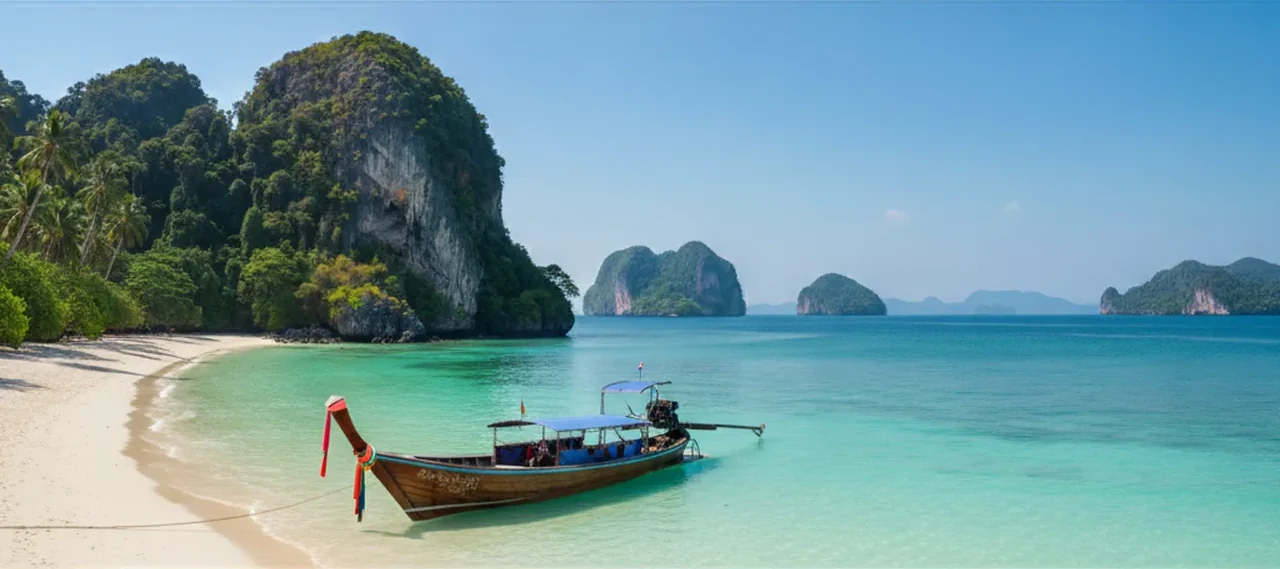
- Krabi is the mainland province next to Phuket: the famous limestone cliffs, Ao Nang and Railay, quieter and more scenic than its neighbour.
- Koh Samui is an island in the Gulf of Thailand: its own atmosphere, coconut groves, and a slightly different weather rhythm. It takes longer to get to, but there's less hustle.
Phuket for convenience and choice, Krabi for nature and quiet, Koh Samui for a slower island pace.
Visas, documents and money
For short tourist trips, citizens of many countries can enter visa-free for a limited period; the rules change from time to time, so check the current conditions on official sources before you fly. Your passport should be valid well beyond the trip (usually at least six months). The local currency is the Thai baht; cash is easy to withdraw from ATMs or exchange at licensed money changers.
* Entry rules, fares and prices are approximate and subject to change. Check the latest information before you travel.