YuSMP Travel Editorial Team
On 9 November 2026, a 30-year-old Russian tourist drowned off the coast of Bentota, Sri Lanka, after being swept away by a wave while swimming - despite forecasters' earlier warnings of dangerous surf. The next day, 10 November, Russia's embassy in Sri Lanka issued a statement urging citizens to swim only in safe, designated spots. A week later, on 16 November, a similar tragedy struck 30km up the coast: a 71-year-old German tourist died at Narigama Beach in Hikkaduwa after being pulled out by a rip current. Both incidents happened on popular stretches of the southwest coast, and both share the same cause - rip currents, which local lifeguards call the leading cause of drownings on the island. For a general overview of the destination and its typical risks, see the guide "Sri Lanka for Russian travellers".
What happened near Bentota and in Hikkaduwa
On the morning of 9 November, a 30-year-old Russian national was swimming in the ocean off Bentota - a resort town on Sri Lanka's southwest coast, roughly 65km from Colombo. According to preliminary police information, the man was swept under by a wave and could not reach the shore; his body was taken to the morgue at Bentota hospital, and police opened an investigation into the circumstances. The weather that day was unfavourable, and forecasters had already warned of dangerous swells along the island's southern and western coasts.
On 16 November, at Narigama Beach in Hikkaduwa (roughly 30km north of Bentota), a rip current swept a 71-year-old German tourist out to sea; he could not be rescued. No official statement from Sri Lanka's tourism authorities on this case had been issued by the time of publication; according to local media, the police and coast guard are investigating. Both beaches - Bentota and Hikkaduwa - are popular with tourists precisely for their convenient infrastructure and proximity to Colombo, but open sandy stretches without reef protection are the most prone to strong rip currents, especially during the monsoon transition in November.
What Russia's embassy said
On 10 November, Russia's embassy in Sri Lanka published a statement to its citizens: it urged travellers to choose only safe, marked spots for swimming and said it was handling paperwork and assisting with matters related to the tragedy.
How to read beach flags and lower the risk
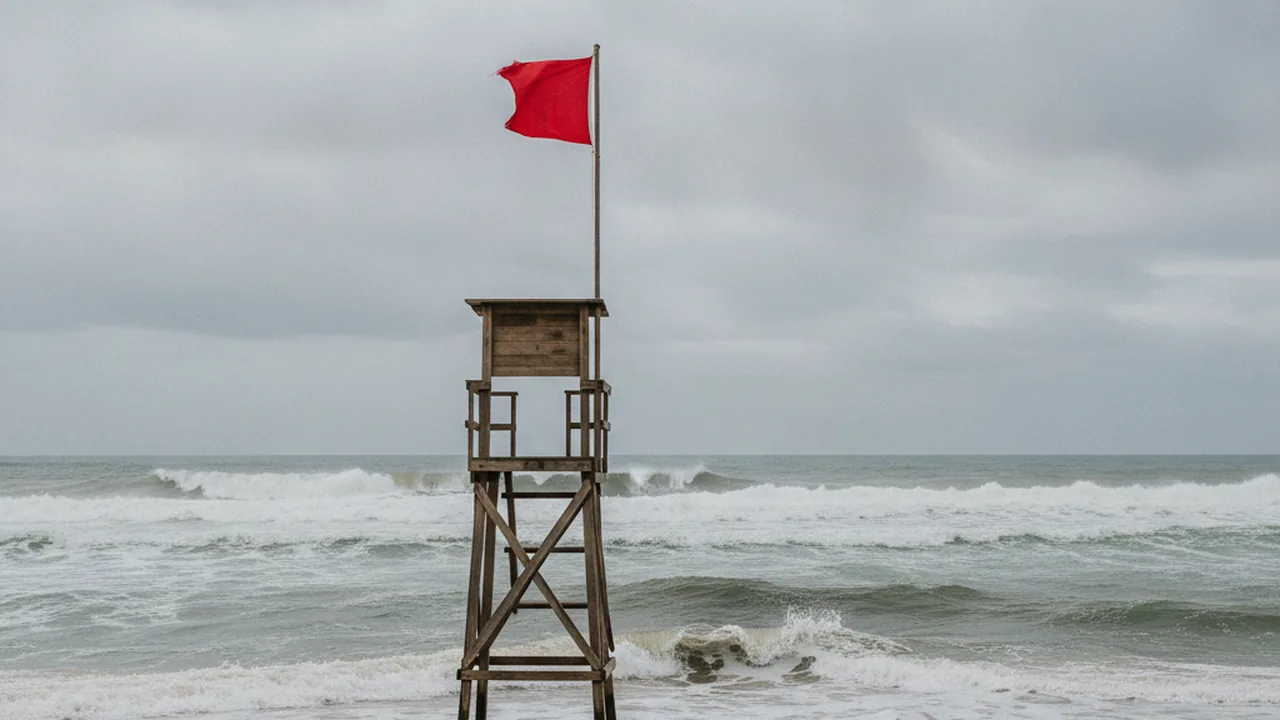
Sri Lanka uses the same flag system adopted by the International Life Saving Federation (ILS) and used on most beaches worldwide. The problem is that official lifeguards do not patrol the whole island: according to safety guides, regular coverage exists only on parts of Hikkaduwa and Unawatuna, while many other beaches, including parts of Bentota, may have no flags or lifeguards at all - which does not mean the water is safe.
What beach flags mean in Sri Lanka
| Flag | What it means | What to do |
|---|---|---|
| Green | Currents and waves are normal, a lifeguard is on duty | Swimming is fine, but watch children and don't swim far from shore |
| Yellow | Elevated surf or a weak current | Only confident swimmers should enter the water, staying close to shore |
| Red | Dangerous conditions, risk of a strong rip current | Do not enter the water, even if the sea looks calm |
| No flag | A beach without official patrol - this does not mean "safe" | Assess the current yourself (water colour, foam, debris movement near shore) and skip swimming if in doubt |
What travellers should do in the water
- Before swimming, ask hotel staff whether a lifeguard patrols this stretch of beach and which flag is up today - this information isn't always marked on tourist maps;
- don't swim beyond the surf line alone, especially in the morning and evening during tide changes - rip currents strengthen at these times;
- if caught in a current, don't swim straight against it toward shore: swim parallel to the beach until you're out of the current, and call for help;
- avoid swimming in open water right after a storm or heavy rain - wave height and current speed rise even when the sea looks calm;
- keep the Sri Lanka tourist police number (119) and your consulate's contacts handy in case of a water incident.
Entry rules for Sri Lanka are unaffected by this story - current requirements are covered in "Sri Lanka visa rules for Russian citizens". Before your trip, check what your travel insurance covers for water or mountain incidents - see "Travel insurance for your trip". Direct flights and connections to the island are covered in "How to get to Sri Lanka from Russia", and you can compare other destinations for these dates via destination match.
Sources
- Izvestia - "Russia's embassy urges tourists to be more careful swimming in Sri Lanka" (10 November 2026, citing the Russian embassy's statement)
- RIA Novosti - "Russian tourist drowns off Sri Lanka's coast" (10 November 2026)
- Lanka Newspapers - "German tourist swept away by rip current dies at Hikkaduwa beach" (16 November 2026)
This situation may be updated - check current advisories on the Russian embassy in Sri Lanka's website (srilanka.mid.ru) and the status of a specific beach on the ground before swimming.