YuSMP Travel Editorial Team
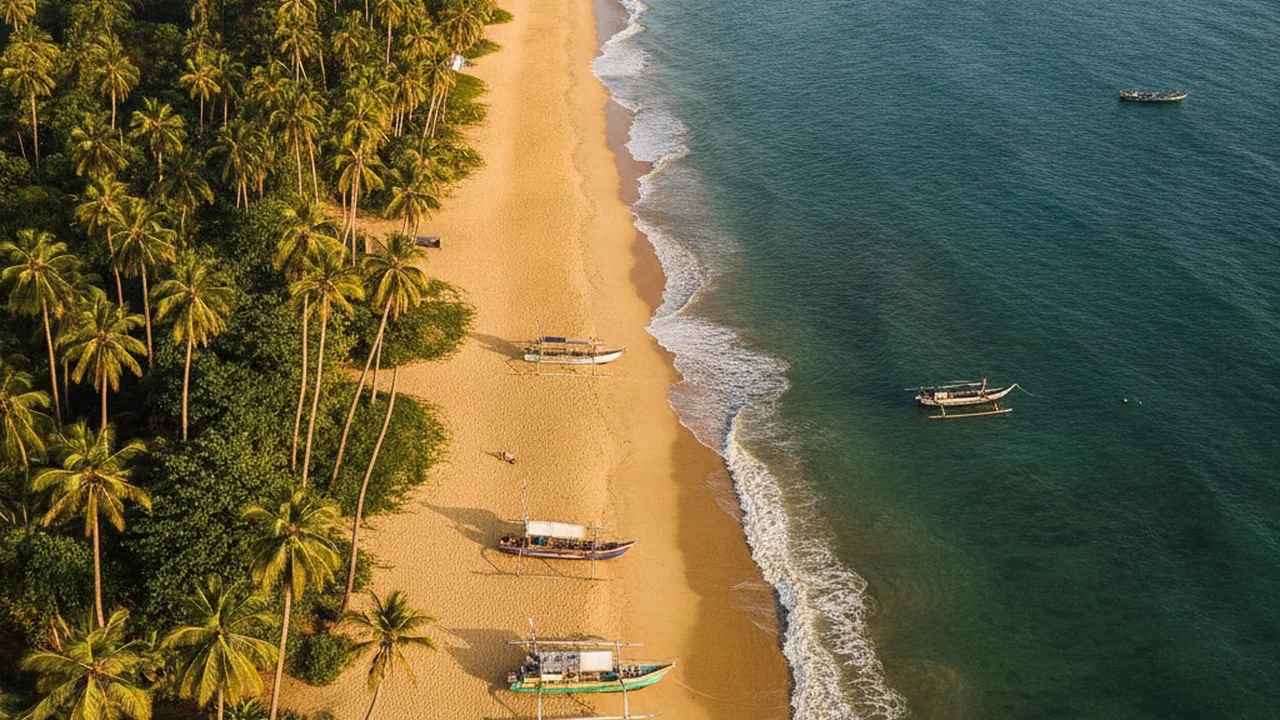
For a first trip to Sri Lanka, Bentota or Unawatuna are the easiest choices — calm water, hotels at every level and a short transfer from the airport. After mid-level diving and surfing, look at Hikkaduwa; for a beginner-friendly surf start, Weligama; for atmosphere and whale watching, Mirissa; and if your dates fall between May and October, when the west and south coasts see rain, the east coast — Trincomalee and Arugam Bay — is the logical option. Below we compare six Sri Lanka resort areas by beaches, pace and season, so you can pick the right one the first time. For a general overview of the island, see the destination page for Sri Lanka, and for visas, money and local rules, our complete Sri Lanka guide.
West, south or east: where to start choosing a Sri Lanka resort
Sri Lanka's resorts split into two seasonal camps. The west and south — Bentota, Hikkaduwa, Unawatuna, Weligama, Mirissa — face the Indian Ocean and run on the same calendar. The east — Trincomalee and Arugam Bay — faces the other direction and runs in opposition: when the west and south are rainy, the east is dry, and vice versa.
The difference isn't only about weather. The west and south are built up for tourism, with more hotels, restaurants and ready-made tours. The east is less developed — less infrastructure, but noticeably fewer tourists even during its own high season.
Which coast is dry, and when
On the west and south coasts (Colombo, Bentota, Hikkaduwa, Unawatuna, Weligama, Mirissa), the dry season runs from December to April — prime time for beach holidays and whale watching. On the east coast (Trincomalee, Arugam Bay, Pasikuda, Kalkudah), it's the reverse: dry from May to October. For a detailed month-by-month breakdown of rainfall and sea temperature, see "Sri Lanka Weather by Month".
Bentota: for a first trip and an all-inclusive beach holiday
Bentota is a west-coast resort about ninety minutes from Colombo airport, so it naturally works as a first or last stop on an island trip. The beaches are wide and gently sloping, and the shoreline is lined with all-inclusive hotels and spas ranging from budget guesthouses to villas with their own pool. Nearby is the calm Bentota Ganga lagoon, where boat trips take you past monitor lizards and birdlife without the open-ocean swell.
The resort doesn't offer much nightlife or serious diving — this is an unhurried format for anyone who wants a beach, a pool and minimal logistics. For a first trip, or for the last few days before your flight home, it's one of the island's most predictable options.
Unawatuna: a quiet bay next to Galle
Unawatuna is a compact horseshoe bay in the south, almost fully sheltered from the swell by a coral reef, which makes the water calmer here than at most southern beaches. That makes it a good fit for families and anyone who isn't planning to dive seriously but still wants to swim without worrying about the current.
Ten to fifteen minutes away by tuk-tuk is the UNESCO-listed Galle Fort: cobbled streets, ramparts to walk along, cafés in old Dutch townhouses. That combination is unusual for a Sri Lankan beach resort — Unawatuna covers both the beach and the culture brief at once.
Mirissa: southern atmosphere and whale watching
Mirissa sits south of Unawatuna and is built up more carefully: bungalows and guesthouses mixed with restaurants right on the water, without high-rise blocks or large chain hotels. It's the most atmospheric of the southern resorts — people come here less for activities and more for the mood: sunsets from Parrot Rock, yoga studios, cafés overlooking the ocean.
From December to April, boats leave Mirissa for whale-watching trips — the waters off Sri Lanka's south coast have one of the highest odds in the world of spotting a blue whale in the wild. That's the main reason to pick this resort over its neighbours.
Hikkaduwa: diving, surfing and the liveliest nightlife
Hikkaduwa is the most touristy and lively of the southern resorts: its main strip runs along the beach with bars, dive-gear shops and restaurants with live music in the evenings. The coastal coral reef has long drawn divers and snorkellers — the protected area offshore is one of the country's oldest marine parks.
The swell here is more consistent than at Unawatuna or Mirissa, which also puts Hikkaduwa on the radar for intermediate surfers. The flip side of that same strength is denser development and a noticeably busy evening scene; it's not the place for a quiet holiday.
Weligama: the best starting point for beginner surfers
Weligama is the bay next to Mirissa, with a gently sloping sandy bottom and soft, predictable waves, which has made it the island's main spot for learning to surf from scratch. Dozens of surf schools and camps line the beach, offering board rental and instructors, including Russian-speaking ones in high season.
Infrastructure is more modest than Unawatuna's: fewer large hotels, more guesthouses and co-living spaces for longer-term guests. Weligama is often chosen as a two- to three-week base built specifically around a surf routine rather than a one- or two-day stop.
East coast: Trincomalee and Arugam Bay — a different season and format
The east coast runs on its own calendar: dry from May to October, exactly when the west and south are either just coming out of or heading into the rains. That makes Trincomalee and Arugam Bay a logical choice for a trip during the west coast's "off-season".
Trincomalee offers wide, uncrowded beaches such as Nilaveli, calm swimming conditions and some of the island's best reef access for snorkelling without a long boat ride out. Arugam Bay is a landmark spot on Asia's surf map: a right-hand point break that draws surfers from around the world from May to September, from beginners on the gentler sections to pros on the main break.
Infrastructure on the east coast is noticeably more modest than on the west and south: fewer high-end hotels, simpler logistics between towns. That's the trade-off for far fewer tourists, even at the height of the local season.
Sri Lanka resort comparison table
| Resort | Coast | Season | Best for | Pace/format |
|---|---|---|---|---|
| Bentota | West | December–April | First trip, families | Relaxed |
| Unawatuna | South | December–April | Beach + culture (Galle nearby) | Quiet |
| Mirissa | South | December–April | Atmosphere, whale watching | Moderate |
| Hikkaduwa | South-west | December–April | Diving, surfing, nightlife | Lively |
| Weligama | South | December–April | Beginner surfing | Moderate |
| Trincomalee / Arugam Bay | East | May–October | Secluded beaches, surfing | Quiet/active |
Which resort should you choose
For a first trip and minimal logistics, Bentota or Unawatuna offer developed infrastructure, calm water, and proximity to both the airport and Galle Fort. For mid-level diving and surfing, pick Hikkaduwa; for a beginner surf start, Weligama. For atmosphere and whale watching without the crowds, Mirissa. If your travel dates fall between May and October, when the west and south see rain, the logical choice is the east coast: Trincomalee for a calm beach and snorkelling, Arugam Bay for surfing.
You can browse accommodation by resort in the hotels catalogue, and if you haven't settled on a format yet, the destination match tool can help narrow it down by budget and dates. Before you travel, it's worth checking entry rules — the Sri Lanka visa for Russian travellers is arranged online in advance — and local laws, covered in "What You Can't Do in Sri Lanka". How to pay on the ground, by card, QR or cash, is covered in a separate guide, "How to Pay in Sri Lanka".
Frequently asked questions
Which Sri Lanka resort is best for a first trip?
Bentota or Unawatuna are the easiest first-trip picks: calm water, developed infrastructure and a short transfer from Colombo airport. Unawatuna also gives you access to Galle Fort if you want to combine the beach with some culture.
Which Sri Lanka resort is best for diving and surfing?
Hikkaduwa is the pick for mid-level diving and surfing, with its long-standing coral reef and consistent swell. Weligama suits complete beginners thanks to its gentle seabed and soft waves, while experienced surfers head to Arugam Bay on the east coast from May to September.
Where in Sri Lanka is quietest, with fewer tourists?
The quietest options are Mirissa outside the December-January peak and the east coast — Trincomalee and Arugam Bay — where tourist numbers stay lower even in their own high season. Hikkaduwa, by contrast, is the busiest and liveliest of the resorts covered here.
Can you combine the west and east coasts in one trip?
Yes, but factor in the distance and travel time between coasts, which can run to several hours by road. That kind of route works better over two to three weeks than a short trip, and it pays to plan around the seasons: the off-season on one coast lines up with the high season on the other.
When should you visit Trincomalee and Arugam Bay?
The east coast's dry season runs from May to October, the opposite of the west and south, which see rain during that stretch. Arugam Bay is especially active as a surf destination from May to September, when its point break is at its most consistent.
Where is best in Sri Lanka for a family holiday?
Bentota and Unawatuna are the easiest with children: gently sloping beaches, calm water behind a reef or inside a lagoon, and hotels with pools. More active resorts like Hikkaduwa or Arugam Bay are geared more towards divers and surfers than families.
Resorts and infrastructure change — check current offers at srilanka.travel before you travel.